Artificial Intelligence Warehouse: How AI Is Transforming Modern Warehouse Operations
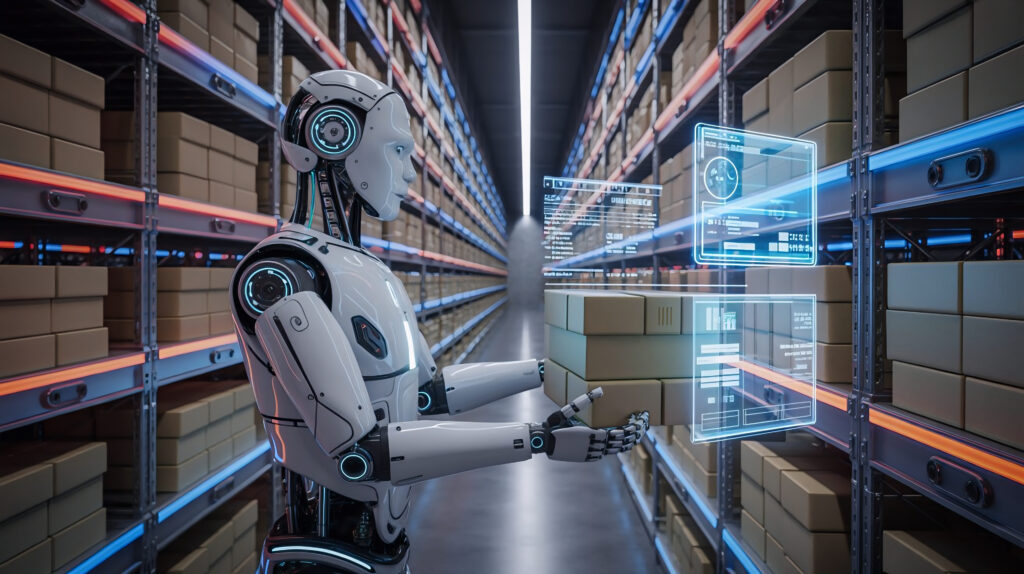
Warehouses are under increasing pressure to process more orders, maintain inventory accuracy, reduce operating costs, and support faster deliveries. At the same time, many warehouse teams still rely on manual processes and systems that make it difficult to respond quickly when demand or operating conditions change.
This is where artificial intelligence warehouse technology is becoming increasingly valuable. AI can analyze warehouse data, identify patterns, predict demand, support operational decisions, and work alongside automation and robotics.
Rather than replacing every existing warehouse process, AI can help businesses make better use of their people, equipment, inventory, and data.
What Is Artificial Intelligence in a Warehouse?
AI in warehouse operations refers to using AI technologies to analyze data and support or automate warehouse activities.
AI can be applied to areas such as:
- Inventory forecasting
- Order picking
- Warehouse layout optimization
- Inventory tracking
- Demand planning
- Workforce planning
- Robotics
- Shipment and fulfillment management
Unlike traditional systems that primarily follow predefined rules, AI can identify patterns in data and provide predictions or recommendations based on changing conditions.
For example, an AI system can analyze historical order patterns and current demand to help determine which products are likely to be needed soon.
How Artificial Intelligence Is Transforming Warehouse Operations
1. Smarter Inventory Management
Inventory accuracy is essential for efficient warehouse operations.
An artificial intelligence warehouse system can analyze inventory levels, sales patterns, product movement, and demand forecasts to identify potential shortages or excess stock.
AI can also help businesses determine which products are moving quickly and which are taking up valuable storage space.
This allows warehouse teams to make more informed decisions about replenishment and storage.
2. Better Demand Forecasting
Unpredictable demand can create serious warehouse challenges.
Too much inventory increases storage and carrying costs, while too little inventory can result in stockouts and delayed orders.
AI can analyze historical sales, seasonal patterns, current demand, and other relevant information to improve forecasting.
More accurate forecasts help businesses prepare warehouse capacity and inventory levels before demand changes.
3. Optimized Picking and Fulfillment
Picking is one of the most important activities in a warehouse because it directly affects order fulfillment.
AI can analyze order patterns and product locations to support better picking strategies.
For example, frequently purchased products can be positioned in locations that reduce unnecessary travel for warehouse workers.
AI can also help prioritize orders based on delivery requirements and available inventory.
4. AI-Powered Warehouse Robotics
AI becomes even more useful when combined with robotics.
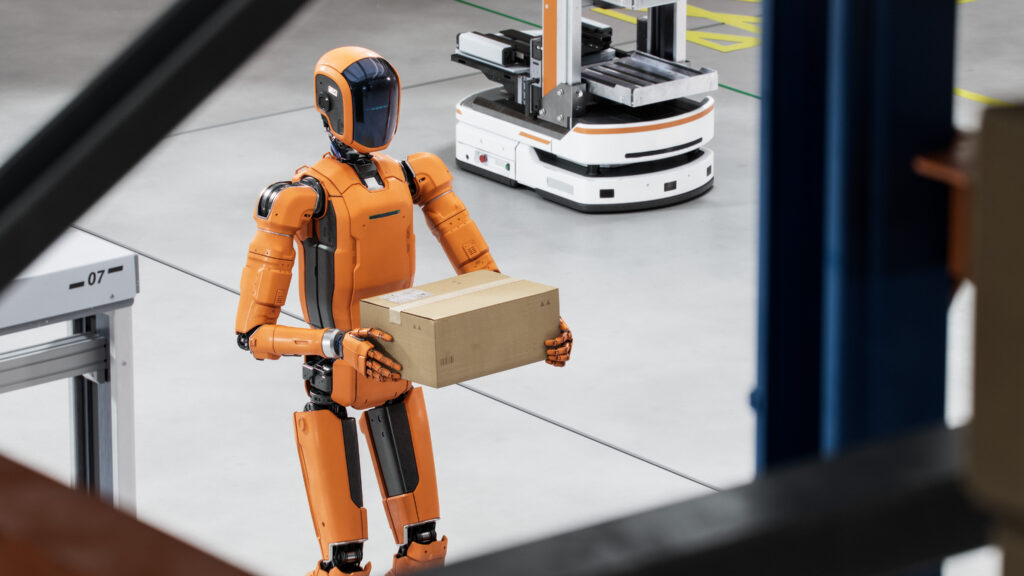
Robotic systems can move products, transport inventory, sort items, or assist with picking. AI can help determine how these robots should be used based on workload, inventory locations, and operational priorities.
This creates a more flexible approach to automation.
Instead of robots simply following fixed routes, AI can help systems respond to changing warehouse conditions.
5 . Improved Warehouse Layout
Warehouse layout has a direct effect on productivity.
Poorly positioned products can increase walking and travel time, creating unnecessary delays.
AI can analyze product demand, movement patterns, storage requirements, and order frequency to identify opportunities for improving warehouse layouts.
This can help businesses make better use of available space while reducing unnecessary movement.
Artificial Intelligence in Warehouse Management
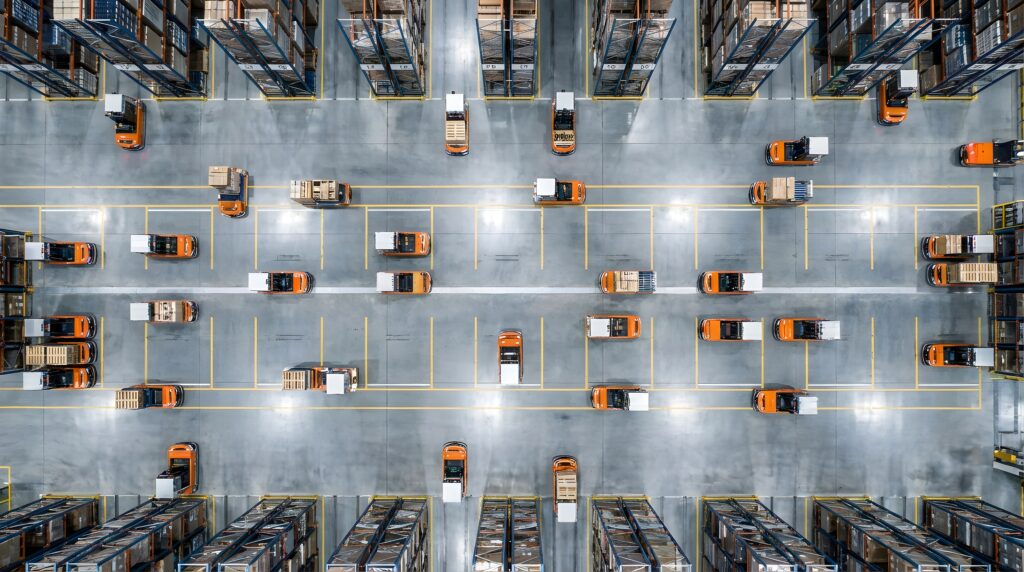
It brings AI capabilities into the systems used to coordinate warehouse activities.
A warehouse management system already manages information such as inventory levels, product locations, receiving, picking, and shipping.
AI can build on this information by identifying patterns and providing recommendations.
For example, instead of simply showing that inventory is low, an AI-enabled system could analyze demand and supplier lead times to help determine when replenishment may be required.
This makes warehouse management more predictive rather than purely reactive.
Benefits of Artificial Intelligence in Warehousing
Businesses can gain several operational benefits from implementing AI in the right areas.
Greater Efficiency
AI can identify inefficient workflows and help teams improve how inventory and orders move through the warehouse.
Better Inventory Accuracy
AI-powered tracking and analysis can help identify discrepancies and improve visibility into inventory movement.
Faster Fulfillment
Better picking strategies, inventory positioning, and workflow coordination can reduce order processing time.
Reduced Operating Costs
Improved resource utilization and fewer unnecessary movements can help control warehouse costs.
Better Decision-Making
AI provides warehouse managers with data-driven insights that can support faster and more informed operational decisions.
Practical Use Cases for AI in Warehousing
The best applications of artificial intelligence warehouse technology depend on the specific needs of a business.
A high-volume e-commerce warehouse may use AI to optimize picking and order fulfillment.
A manufacturing warehouse may use AI to forecast material requirements and manage inventory availability.
A distribution center may use AI to improve warehouse layout, coordinate robotics, and prioritize shipments.
This highlights an important point: AI should be applied to specific operational problems rather than introduced simply as a technology upgrade.
Challenges Businesses Should Consider
AI can improve warehouse operations, but implementation requires planning.
Data Quality
AI depends on reliable data. Inaccurate inventory records or incomplete operational information can affect the quality of AI recommendations.
Integration
AI solutions may need to connect with warehouse management systems, ERP platforms, robotics, scanners, and other technologies.
Implementation Costs
Businesses should consider software, infrastructure, integration, training, and ongoing maintenance costs.
Employee Adoption
Warehouse employees need to understand how AI affects their workflows. Training and clear communication can make adoption easier.
Human Oversight
AI recommendations should be reviewed appropriately, especially when decisions can have significant financial or operational consequences.
How to Implement AI in a Warehouse
Businesses do not need to transform their entire warehouse at once.
A practical approach is to:
- Identify a specific problem: Look for bottlenecks involving inventory, picking, forecasting, or fulfillment.
- Evaluate available data: Make sure the information required for AI is accurate and accessible.
- Choose the right technology: Select a solution based on the operational problem rather than the technology itself.
- Start with a focused use case: Test AI in one area before expanding it across the warehouse.
- Measure performance: Track metrics such as fulfillment time, inventory accuracy, productivity, and operating costs.
This approach makes it easier to determine whether AI is producing measurable value.
The Future of AI in Warehousing
As warehouse systems become more connected, AI will play a bigger role monitoring conditions, identifying bottlenecks, prioritizing tasks, and coordinating systems. Robotics will grow more adaptable with AI-driven vision and sensors.
The warehouse of the future will function as a connected ecosystem of AI, robotics, management systems, automation, and human workers.
Final Thoughts
AI is transforming warehouse inventory, forecasting, picking, fulfillment, and automation by enabling better data-driven decisions. Paired with robotics and warehouse management systems, it boosts efficiency and responsiveness.
However, success requires quality data, the right systems, trained staff, clear goals, and measurable targets. For modernization, start with a specific challenge and expand from proven AI use cases.
FAQs
1. What is artificial intelligence in a warehouse?
The use of AI to analyze data, identify patterns, make predictions, and support or automate activities such as inventory management, picking, forecasting, and fulfillment.
2. How is AI used in warehouse management?
It can support inventory forecasting, warehouse layout optimization, order prioritization, picking, robotics, and operational decision-making.
3. What are the benefits of AI in warehousing?
AI can improve warehouse efficiency, inventory visibility, forecasting, fulfillment speed, resource utilization, and decision-making while helping businesses identify operational inefficiencies.
4. Can AI work with warehouse robotics?
Yes. AI can help coordinate warehouse robotics by analyzing workloads, inventory locations, task priorities, and warehouse conditions, allowing robotic systems to operate more efficiently and adapt to changing requirements.