AI Warehouse Robotics: How AI Is Transforming Modern Warehouses
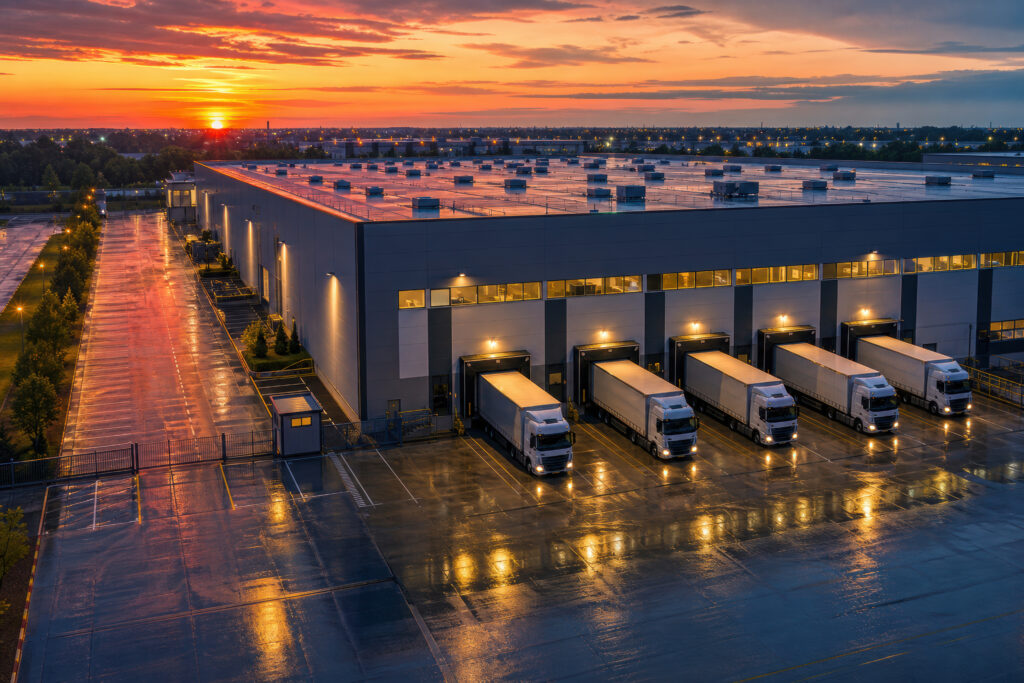
Modern warehouses are under pressure to process more orders while maintaining speed, accuracy, and cost efficiency. Rising order volumes, labor constraints, tighter delivery expectations, and increasingly complex inventory make traditional warehouse processes harder to scale.
This is where warehouse robotics is becoming increasingly important.
Robots can handle physical tasks such as moving goods, transporting inventory, picking items, and supporting order fulfillment. When combined with AI, these systems can also make better decisions about where items should move, which tasks should be prioritized, and how warehouse resources should be used.
The result is a shift toward warehouses that are not only automated, but increasingly intelligent.
What Is Warehouse Robotics?
Warehouse robotics refers to robotic systems designed to perform or assist with physical tasks inside warehouses and distribution facilities.
Depending on the operation, these systems can support:
- Moving inventory between locations
- Picking and sorting products
- Loading and unloading
- Order fulfillment
- Pallet handling
- Inventory movement
- Repetitive material handling
Warehouse robots can operate independently or work alongside employees.
The addition of AI makes these systems more capable. Instead of simply following fixed instructions, AI-enabled robots can use data, sensors, cameras, and software to understand their environment and adjust their actions.
How AI Is Changing Warehouse Robotics
Traditional automation generally follows predefined rules. AI allows warehouse systems to respond to changing conditions and make decisions based on available information.
For example, an automated system may know that a product needs to be moved from one location to another. An AI-enabled system can also consider warehouse congestion, task priority, inventory location, and available robots when deciding how that movement should happen.
This is where AI in warehousing creates value.
AI connects physical automation with operational decision-making, helping warehouses become more flexible as order volumes and conditions change.
Key Applications of AI Warehouse Robotics
1. Automated Picking
Order picking can be one of the most labor-intensive warehouse activities.
Robotic systems can assist with picking products and transporting them to packing stations. AI can help determine which tasks should be handled first and how robots should move through the warehouse.
For high-volume operations, this can reduce repetitive manual movement and improve fulfillment speed.
2. Smarter Inventory Movement
Moving products around a warehouse requires constant coordination.
AI can analyze inventory locations, order demand, task priorities, and warehouse activity to determine where goods need to be moved.
This allows AI-powered warehouse automation to respond more effectively to changing workloads instead of relying entirely on fixed movement patterns.
3. Automated Sorting
Sorting becomes increasingly difficult as warehouses handle more products and orders.
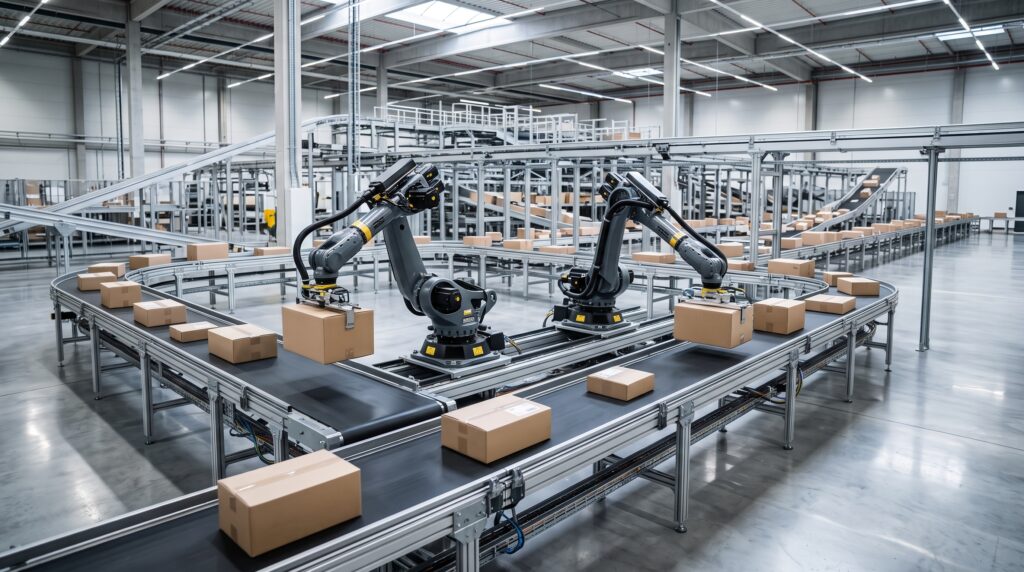
Robotic sorting systems can identify products and direct them toward the appropriate location, order, or processing area.
AI-powered vision systems can help identify objects, read labels, and support sorting decisions.
4. Inventory Tracking
Knowing exactly where inventory is located is critical for warehouse performance.
AI-enabled robotic systems can use cameras, sensors, scanners, and warehouse software to collect information about inventory movement.
This can help businesses identify discrepancies, improve inventory visibility, and maintain more accurate records.
5. Warehouse-to-Person Operations
In traditional warehouses, employees often spend considerable time walking to locate and retrieve products.
Warehouse robots can instead bring inventory to designated workstations.
This warehouse-to-person approach can reduce unnecessary employee movement and allow workers to focus on picking, packing, and other tasks.
AI Warehouse Automation vs Traditional Automation
Not all warehouse automation uses AI.
Traditional automation generally performs predefined tasks according to fixed rules. Conveyor systems, automated storage and retrieval systems, and basic sorting equipment are examples.
AI warehouse automation adds a layer that can analyze data and adapt decisions based on changing conditions.
For example, a traditional automated system may move products along a fixed route. An AI-enabled system can evaluate warehouse congestion and task priorities to determine an efficient route.
Businesses should select technology to match their needs not all warehouses need advanced AI.
Benefits of AI-Powered Warehouse Automation
When implemented appropriately, warehouse robotics can provide several operational benefits.
Higher Productivity
Robots can perform repetitive tasks consistently and operate for extended periods, helping warehouses process higher volumes.
Improved Accuracy
Automated systems can reduce certain manual errors in picking, sorting, and inventory movement.
Better Space Utilization
AI can help analyze storage patterns and product demand to support more effective use of warehouse space.
Reduced Manual Movement
Robots can transport inventory across facilities, reducing the amount of walking and carrying required from employees.
Greater Scalability
Automation can help warehouses handle increases in order volume without increasing manual work at the same rate.
The Role of Smart Warehouse Technology
Smart warehouse technology extends beyond robots.
Smart warehouses integrate management systems, robotics, sensors, cameras, IoT, AI, and real-time data for a complete view of activity.
For example, orders are identified by the system, AI decides fulfillment, and robots move inventory. This connected approach is more effective than using standalone automated machines.
Challenges Businesses Should Consider
AI and robotics can deliver significant benefits, but implementation requires careful planning.
Initial Investment
Robotics systems can require significant investment in equipment, software, integration, infrastructure, and maintenance.
Integration
Robots need to work with existing warehouse management and enterprise systems. Poor integration can limit their effectiveness.
Data Quality
AI systems depend on reliable operational data. Inaccurate inventory or incomplete warehouse information can affect system performance.
Workforce Adaptation
Employees may need training to work alongside robotic systems and manage new workflows.
Choosing the Right Tasks
Not every warehouse activity needs robotics. Businesses should identify repetitive, high-volume, or physically demanding tasks where automation can create measurable value.
How to Implement Warehouse Robotics
Businesses considering warehouse robotics should avoid starting with technology alone.
A practical implementation process includes:
- Identify operational bottlenecks: Determine where labor, time, or accuracy problems are affecting performance.
- Evaluate the workflow: Understand how goods currently move through the facility.
- Choose suitable automation: Select robotic systems based on the actual task rather than the technology trend.
- Check system compatibility: Ensure the robotics solution can integrate with existing warehouse software.
- Start with a measurable use case: Pilot one process and establish clear performance targets.
- Measure results: Track productivity, fulfillment time, accuracy, labor utilization, and operating costs.
This approach helps businesses determine whether automation is delivering practical value before expanding it across the warehouse.
The Future of Robotics in Logistics
The future of logistics will see closer coordination between AI, robots, warehouse software, and humans. AI will monitor activity and manage tasks, while improved tech makes robots more adaptable.
Warehouses won’t be human-free employees will still handle judgment, exceptions, and supervision. The general direction is people and smart machines working together.
Final Thoughts
Warehouse robotics is now key to strategy, using automation and AI to improve inventory handling. Success requires more than just robots it needs good data, connected systems, efficient workflows, and clear goals.
The best results come from targeting specific problems with AI automation. As technology advances, combining robotics, AI, and smart systems will make operations more scalable, responsive, and efficient.
FAQs
1. What is warehouse robotics?
Warehouse robotics refers to robotic systems used to move, pick, sort, store, and manage goods within warehouses and distribution facilities.
2. How does AI improve warehouse robotics?
AI allows robotic systems to analyze information from sensors, cameras, warehouse software, and operational data to make more adaptive decisions about tasks, movement, and inventory.
3. What is AI warehouse automation?
It combines AI with automated equipment and software to improve warehouse decision-making and physical processes.
4. What are the benefits of warehouse robotics?
Key benefits include higher productivity, improved accuracy, reduced manual movement, better inventory visibility, more efficient space utilization, and greater scalability for high-volume operations.