
Warehouse Robotics: The Future of Smart Warehousing
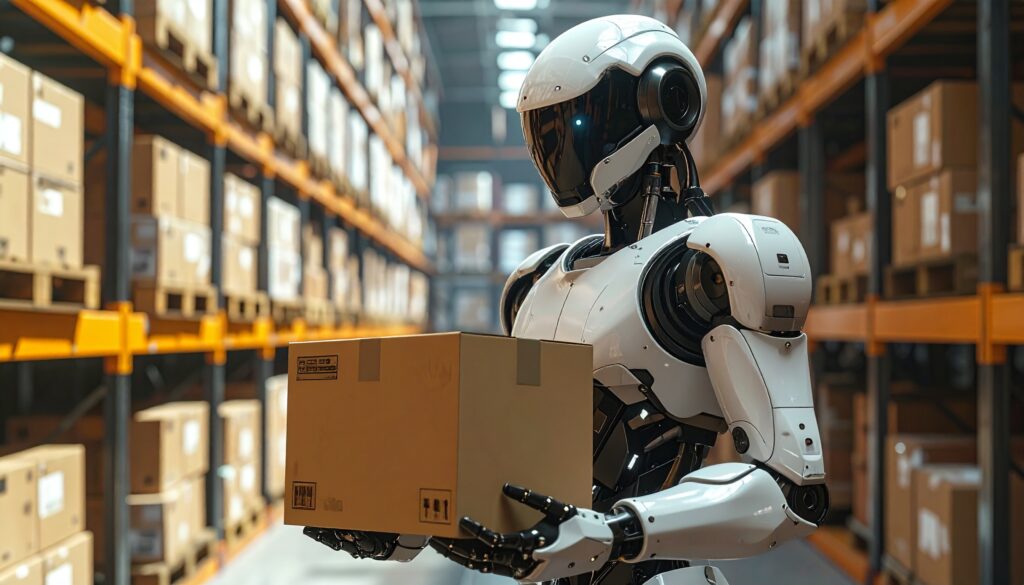
Modern warehouses are expected to do more than ever before. Businesses need to process increasing order volumes, maintain accurate inventory, reduce operating costs, and deliver products faster than ever. Meeting these expectations with manual processes alone is becoming increasingly difficult.
This is why warehouse robotics is becoming a key part of warehouse operations. From transporting inventory to assisting with picking and sorting, robots are helping businesses improve efficiency while supporting warehouse employees in repetitive and time-consuming tasks.
Combined with artificial intelligence and advanced software, today’s robotic systems are making warehouses smarter, more flexible, and better prepared for future growth.
In this article, we’ll explore how warehouse robotics works, its benefits, real-world applications, and why it’s becoming an essential part of modern warehouse automation.
What Is Warehouse Robotics?
Warehouse robotics refers to the use of robotic systems to automate warehouse tasks such as moving inventory, picking products, sorting packages, palletizing goods, and transporting materials throughout a warehouse.
Unlike traditional automation that performs fixed repetitive tasks, modern warehouse robots often use AI, sensors, cameras, and machine learning to navigate warehouse environments, avoid obstacles, and adapt to changing operational conditions.
These intelligent systems improve efficiency while allowing warehouse teams to focus on tasks that require human decision-making.
Why Warehouses Are Adopting Robotics
Warehouses today face several operational challenges, including labor shortages, rising customer expectations, increasing inventory complexity, and pressure to reduce costs.
Manual operations often struggle to keep pace with growing demand.
By investing in warehouse robotics, businesses can improve productivity, reduce repetitive manual work, and increase operational accuracy without compromising service quality.
Rather than replacing employees, robots help warehouse teams complete more work safely and efficiently.
How Warehouse Robotics Is Transforming Warehousing
Automated Material Movement
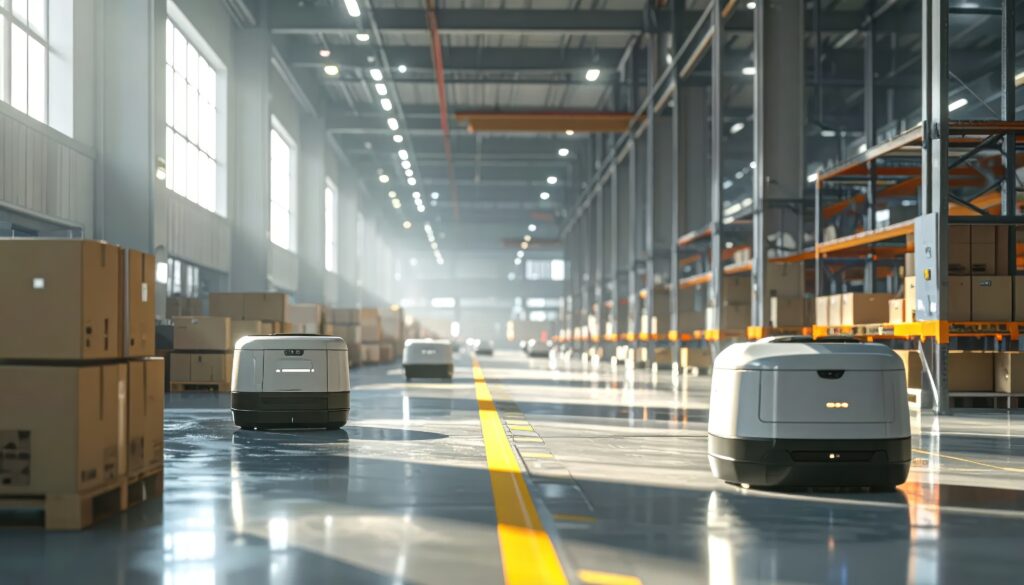
One of the most common uses of warehouse robots is transporting inventory between storage locations, picking stations, and shipping areas.
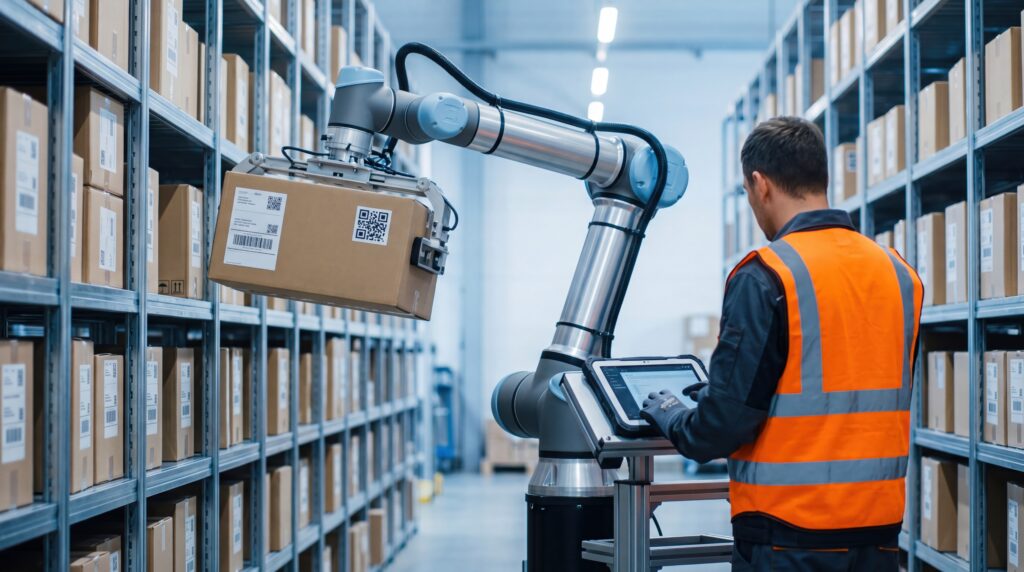
Autonomous mobile robots (AMRs) move products efficiently throughout the warehouse, reducing unnecessary employee travel and improving workflow.
Faster Order Picking
Order picking is one of the most labor-intensive warehouse activities.
Modern warehouse robotics systems assist employees by locating products, delivering inventory to picking stations, and optimizing picking routes.
This speeds up fulfillment while reducing errors.
Intelligent Sorting
Sorting packages accurately is critical for efficient warehouse operations.
AI-powered robotic systems identify products using cameras and sensors before automatically directing them to the correct shipping or storage location.
This improves order accuracy while supporting faster shipment processing.
Better Inventory Management
When integrated with warehouse automation platforms, robotics systems continuously monitor inventory movement and update stock records in real time.
This improves inventory accuracy while helping businesses reduce stock discrepancies and improve replenishment planning.
AI-Powered Decision Making
The latest AI-powered robotics solutions do more than perform physical tasks.
They analyze warehouse data, identify bottlenecks, optimize workflows, and adapt to changing warehouse conditions without requiring constant human intervention.
This makes warehouse operations more responsive and efficient.
Benefits of Warehouse Robotics
Businesses adopting warehouse robotics often experience measurable improvements across multiple areas.
Some of the biggest benefits include:
- Faster order fulfillment
- Improved inventory accuracy
- Lower operational costs
- Better warehouse safety
- Increased productivity
- Reduced manual handling
- More efficient warehouse space utilization
- Better support for growing order volumes
These advantages make robotics one of the fastest-growing investments in modern warehouse operations.
Practical Use Cases
Today, warehouse robotics is being used across a wide range of industries.
E-commerce companies use robots to speed up order fulfillment during peak shopping seasons.
Manufacturers automate material movement between production and warehouse facilities.
Third-party logistics providers improve picking efficiency while handling thousands of customer orders each day.
Retail distribution centers use robotic sorting systems to improve shipping accuracy and reduce delivery times.
These examples demonstrate how logistics robotics is creating practical business value rather than simply replacing manual work.
Choosing the Right Warehouse Robotics Solution
Not every warehouse requires the same level of automation.
Before investing in warehouse robotics, businesses should evaluate:
- Current warehouse workflows
- Order volumes
- Available warehouse space
- Integration with warehouse management systems
- Scalability for future growth
- Return on investment
- Employee training requirements
Starting with one high-impact process, such as material transport or order picking, often delivers the fastest results while minimizing implementation risks.
The Future of Warehouse Robotics
The future of warehouse robotics will be driven by greater intelligence and collaboration.
Robots will increasingly work alongside warehouse employees, using AI to make decisions, coordinate workflows, and adapt to changing operational conditions.
Advances in AI-powered robotics will enable systems to predict demand, optimize inventory movement, improve resource allocation, and communicate directly with warehouse management systems in real time.
As these technologies become more affordable, businesses of all sizes will have greater access to advanced warehouse automation solutions that were once available only to large enterprises.
Final Thoughts
The future of warehousing is becoming more intelligent, connected, and automated.
Warehouse robotics is helping businesses improve productivity, reduce operational costs, and increase warehouse accuracy while supporting employees with repetitive and physically demanding tasks.
By combining warehouse robots, AI, and modern warehouse automation technologies, organizations can build smarter warehouses that are better equipped to handle growing customer demands and increasingly complex supply chains.
FAQs
1. What is warehouse robotics?
Warehouse robotics refers to robotic systems that automate warehouse tasks such as inventory movement, order picking, sorting, and material handling to improve operational efficiency.
2. How do warehouse robots improve warehouse operations?
Warehouse robots help businesses speed up order fulfillment, improve inventory accuracy, reduce manual work, and support safer warehouse operations.
3. What is the difference between warehouse robotics and warehouse automation?
Warehouse automation is the broader use of technology to improve warehouse processes, while warehouse robotics specifically focuses on using robots to perform physical warehouse tasks.
4. How is AI used in warehouse robotics?
AI-powered robotics enables robots to analyze data, navigate warehouse environments, optimize workflows, avoid obstacles, and make intelligent operational decisions in real time.