Logistics Growth: How Generative and Agentic AI Are Creating a New Era of Efficiency and Innovation
The logistics industry has always evolved alongside technology. From barcode scanners and warehouse management systems to real-time fleet tracking, each advancement has helped businesses move goods faster and more efficiently. Today, the industry is entering another major transformation one powered by artificial intelligence.
The logistics growth is no longer centered on simply automating repetitive tasks. Instead, businesses are adopting intelligent systems that can analyze data, make recommendations, and even take action with minimal human intervention. Two technologies driving this shift are generative AI and agentic AI.
Together, they are reshaping how logistics companies plan routes, manage warehouses, forecast demand, and respond to supply chain disruptions. More importantly, they are accelerating logistics growth by helping organizations operate with greater speed, accuracy, and resilience.
How AI Is Accelerating Logistics Growth
Global supply chains have become increasingly complex. Customer expectations continue to rise; delivery windows are shrinking, and businesses face constant pressure to reduce costs while improving service levels.
Traditional automation helped streamline operations, but today’s challenges require systems that can think, learn, and adapt in real time.
This is where artificial intelligence is redefining the future of logistics.
Rather than simply executing predefined workflows, AI-powered systems analyze massive amounts of operational data, identify patterns, predict potential issues, and recommend the best course of action before problems impact the supply chain.
Understanding Generative AI in Logistics
Generative AI is designed to create content, generate insights, summarize information, and assist with decision-making using natural language.
In logistics, this technology can help businesses by:
- Summarizing shipment reports
- Creating operational dashboards
- Generating supply chain insights
- Assisting customer support teams
- Producing documentation and compliance reports
- Answering operational queries through AI assistants
Instead of manually reviewing thousands of records, logistics managers can simply ask AI questions like:
- Which delivery routes experienced the highest delays this week?
- What inventory is most at risk of stockout?
- Which carriers consistently meet delivery targets?
Generative AI provides fast, data-driven answers that improve decision-making across the organization.
What Is Agentic AI?
While generative AI helps people make better decisions, agentic AI goes a step further.
Agentic AI refers to intelligent systems capable of planning, making decisions, and executing tasks autonomously based on predefined business goals.
Rather than waiting for human instructions, these AI agents continuously monitor operations and take action when conditions change.
Within logistics, agentic AI can:
- Reassign deliveries after unexpected delays
- Optimize delivery routes in real time
- Coordinate warehouse workflows
- Monitor inventory levels
- Schedule vehicle maintenance
- Trigger replenishment orders automatically
This level of autonomy enables businesses to respond much faster to changing conditions without increasing operational complexity.
Generative AI vs. Agentic AI
Although both technologies rely on artificial intelligence, they serve different purposes.
Together, they create a powerful foundation for the future of logistics, combining intelligent analysis with automated execution.
How AI Is Accelerating Logistic Growth
Organizations investing in AI are seeing improvements across nearly every stage of their supply chains, creating new opportunities for logistics growth.
Smarter Route Optimization
AI evaluates traffic, weather, delivery priorities, fuel costs, and historical performance to recommend the most efficient routes.
Instead of static planning, routes adapt throughout the day, reducing delays and transportation costs while supporting long-term logistic growth.
Intelligent Warehouse Operations
Efficient warehouse operations are becoming a major driver of logistics growth across global supply chains.
AI coordinates inventory placement, picking priorities, labor allocation, and automated equipment to improve throughput while reducing fulfillment errors.
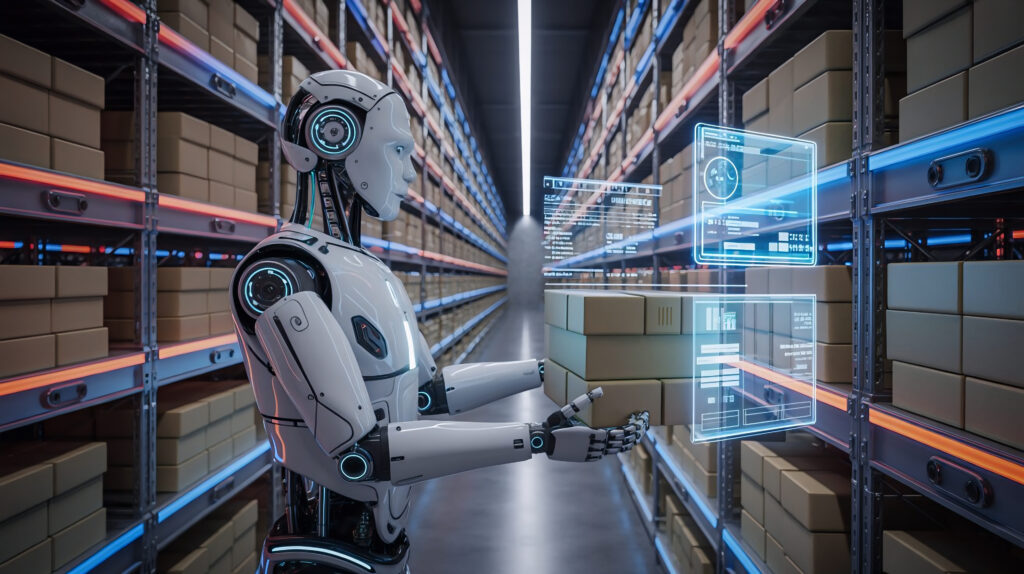
Combined with robotics and warehouse automation, AI enables faster and more reliable order processing.
Predictive Demand Forecasting
More accurate forecasting contributes directly to logistics growth by reducing waste and improving inventory planning.
AI expands this capability by analyzing seasonal trends, economic indicators, purchasing behavior, supplier performance, and market conditions to generate more accurate demand forecasts.
Better forecasting reduces excess inventory while minimizing costly stockouts.
Real-Time Supply Chain Visibility
Greater visibility enables faster decisions that support sustainable logistics growth.
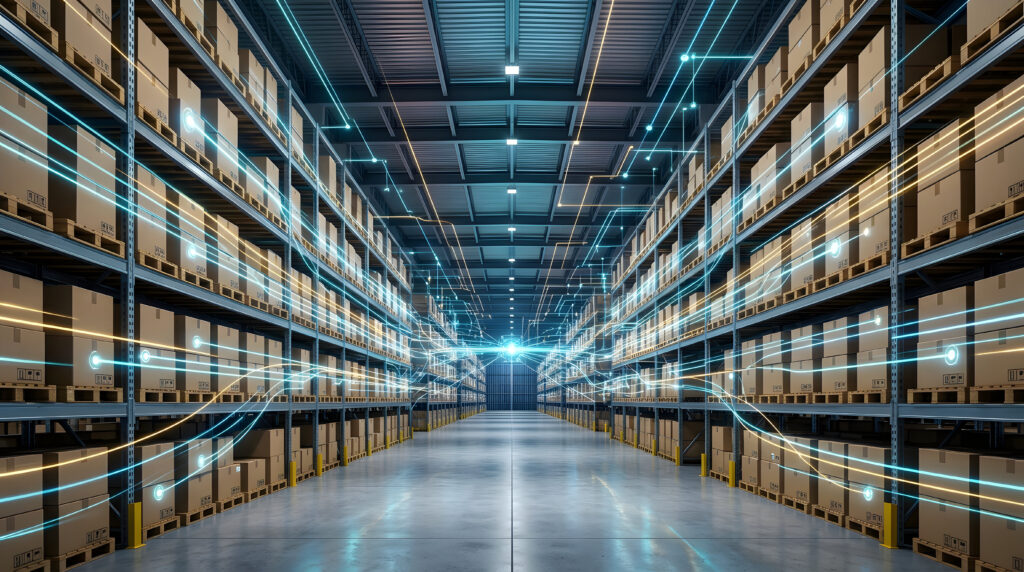
AI brings these data sources together into a unified view, allowing logistics managers to monitor shipments, identify bottlenecks, and respond proactively before disruptions escalate.
Improved visibility strengthens decision-making throughout the logistics network.
Faster Customer Service
Customer expectations continue to increase.
Generative AI-powered assistants can instantly answer shipment questions, provide delivery updates, retrieve documentation, and resolve common support requests.
This reduces response times while allowing customer service teams to focus on more complex issues.
The Business Benefits of AI in Logistics
The adoption of AI delivers measurable operational advantages that fuel logistics growth.
Businesses benefit from:
- Faster operational decisions
- Lower transportation costs
- Improved warehouse productivity
- Better inventory accuracy
- Increased delivery reliability
- Reduced manual workloads
- Enhanced customer experiences
- Greater operational scalability
These improvements collectively contribute to sustainable logistics growth while helping businesses remain competitive.
Challenges Businesses Should Consider
Businesses pursuing logistics growth should also consider implementation challenges before adopting AI.
Data Quality
AI systems depend on accurate, well-structured operational data. Poor data quality limits the effectiveness of predictions and automation.
System Integration
Many organizations operate multiple logistics platforms, ERP systems, transportation software, and warehouse management tools.
Integrating AI across these systems is essential for generating reliable insights and coordinated workflows.
Workforce Adoption
AI should be viewed as a tool that supports employees rather than replaces them.
Training teams to work alongside intelligent systems encourages adoption while improving overall operational performance.
Governance and Security
Businesses must establish clear policies around AI decision-making, data privacy, cybersecurity, and human oversight to ensure responsible deployment.
The Future of Logistics Is Human and AI Together
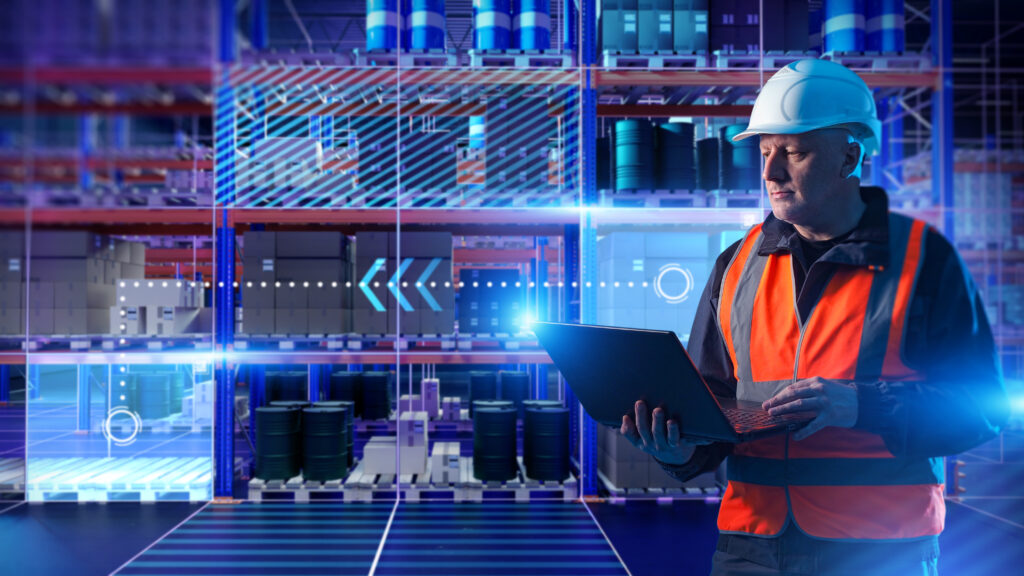
The future of logistics growth depends on combining intelligent technology with experienced professionals.
Instead, it is about allowing technology to handle repetitive analysis, routine decisions, and operational coordination while logistics professionals focus on strategy, customer relationships, exception management, and continuous improvement.
Generative AI empowers people with better insights.
Agentic AI empowers systems to execute those insights.
Together, they create more resilient, responsive, and intelligent supply chains.
Final Thoughts
The future of logistics is being shaped by organizations that combine automation with intelligent decision-making. Generative AI is transforming how businesses access information and generate insights, while agentic AI is shaping the next phase of logistics growth for businesses worldwide.
As these technologies continue to mature, companies will strengthen logistics growth through smarter automation, better forecasting, and faster decisions.
For businesses focused on long-term logistic growth, AI is no longer an emerging technology. It is becoming a strategic capability that drives efficiency, innovation, and competitive advantage across the entire logistics ecosystem.
FAQs
1. What is the future of logistics with AI?
The future of logistics involves using technologies like generative AI and agentic AI to improve supply chain visibility, automate operations, optimize routes, enhance forecasting, and enable faster, data-driven decision-making.
2. What is the difference between generative AI and agentic AI in logistics?
Generative AI creates insights, summaries, and recommendations based on logistics data, while agentic AI can independently make decisions and execute tasks such as rerouting shipments, managing inventory, or coordinating warehouse workflows.
3. How does AI support logistic growth?
AI supports logistics growth by reducing operational costs, improving delivery performance, increasing warehouse efficiency, enhancing demand forecasting, and enabling businesses to scale without proportionally increasing manual effort.
4. Can small and mid-sized logistics companies benefit from AI?
Yes. Many AI-powered logistics solutions are scalable, allowing small and mid-sized businesses to improve route planning, warehouse management, customer service, and operational efficiency without requiring large enterprise-level investments.