How AI Is Building the Smart Warehouse of the Future
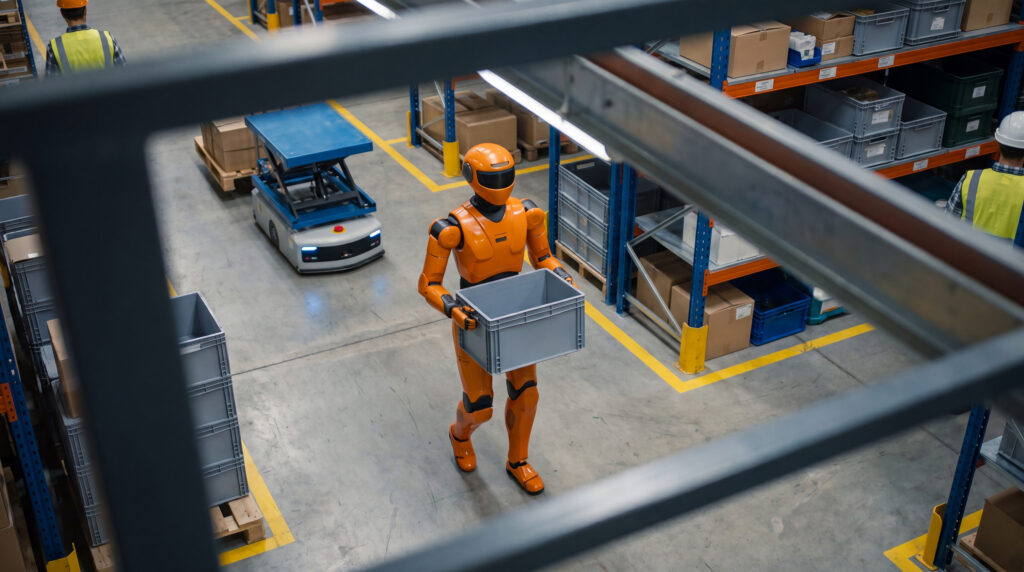
Warehouses are no longer just storage facilities. They have become strategic hubs that directly impact delivery speed, inventory accuracy, customer satisfaction, and overall supply chain performance.
As businesses face increasing order volumes, labor shortages, and rising customer expectations, traditional warehouse operations are struggling to keep pace. Companies need faster, smarter, and more efficient ways to manage inventory and fulfill orders.
This is where the smart warehouse is changing the future of logistics. Powered by artificial intelligence, advanced analytics, connected devices, and warehouse automation, modern warehouses are becoming intelligent ecosystems capable of making real-time decisions and continuously improving operations.
In this article, we’ll explore what a smart warehouse is, how AI powers it, its benefits, real-world applications, challenges, and why it represents the future of warehouse logistics.
What is a Smart Warehouse?
A smart warehouse is a warehouse that uses technologies such as artificial intelligence (AI), Internet of Things (IoT), robotics, machine learning, and warehouse automation to optimize warehouse operations with minimal manual intervention.
Unlike traditional warehouses that rely heavily on manual processes, a smart warehouse uses real-time data to improve inventory management, streamline workflows, optimize storage, and speed up order fulfillment.
AI enables these warehouses to continuously learn from operational data and make smarter decisions that improve efficiency over time.
Why Warehouses Need AI
Modern warehouse logistics has become increasingly complex.
Warehouses now process thousands of orders daily while managing inventory across multiple sales channels. At the same time, customers expect faster shipping, real-time order tracking, and fewer fulfillment errors.
Manual processes alone cannot efficiently handle this level of complexity.
AI helps businesses overcome these challenges by analyzing operational data, identifying patterns, predicting demand, and automating repetitive decisions.
The result is a more efficient smart warehouse capable of adapting to changing business needs.
How AI Powers a Smart Warehouse
Artificial intelligence supports nearly every aspect of warehouse operations.
Intelligent Inventory Management
Inventory accuracy is one of the biggest priorities in any warehouse.
AI continuously monitors inventory movement, analyzes demand patterns, and predicts replenishment needs.
Instead of relying solely on historical reports, a smart warehouse maintains optimal inventory levels using real-time information.
This reduces stock shortages, prevents overstocking, and improves overall warehouse logistics.
Smarter Warehouse Automation
One of the biggest advantages of a smart warehouse is intelligent warehouse automation.
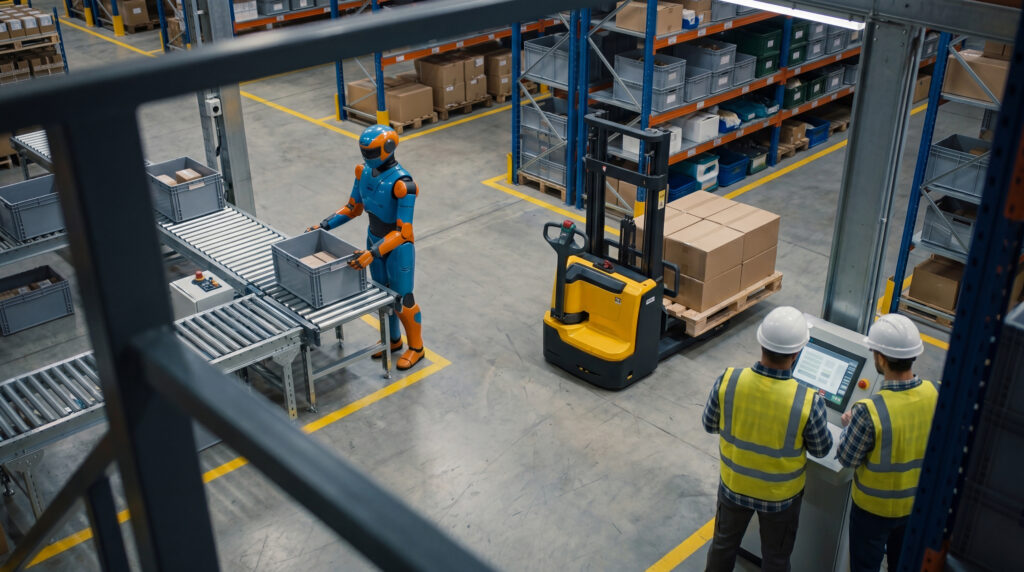
AI coordinates automated storage systems, conveyors, robotic picking equipment, and sorting systems to improve warehouse efficiency.
Rather than following fixed workflows, AI continuously adjusts operations based on incoming orders, inventory levels, and warehouse capacity.
This allows businesses to process more orders with fewer delays.
AI-Powered Order Picking
Order picking is often one of the most time-consuming warehouse activities.
AI helps prioritize picking sequences, recommend the fastest routes through the warehouse, and coordinate workers with robotic systems.
These improvements reduce travel time while increasing order accuracy and productivity.
Predictive Demand Forecasting
Accurate forecasting is essential for efficient warehouse logistics.
AI analyzes historical sales, seasonal demand, customer purchasing behavior, promotions, and external market factors to predict future inventory requirements.
A smart warehouse can prepare inventory in advance, reducing fulfillment delays during peak demand.
Warehouse Robotics
Robots play a major role in modern warehouse automation.
AI-powered robots assist with:
- Transporting inventory
- Picking products
- Sorting packages
- Pallet movement
- Inventory scanning
- Replenishment tasks
Rather than replacing employees, robots handle repetitive work while allowing warehouse teams to focus on higher-value activities.
Benefits of a Smart Warehouse
Businesses investing in a smart warehouse gain several operational advantages.
Faster Order Fulfillment
AI helps optimize picking, packing, and shipping processes, allowing warehouses to fulfill orders more quickly while maintaining high accuracy.
Better Inventory Visibility
A smart warehouse provides real-time inventory tracking across every storage location.
This enables faster decision-making and reduces inventory discrepancies.
Higher Operational Efficiency
AI continuously identifies workflow improvements that increase productivity while reducing unnecessary movement and idle time.
Combined with warehouse automation, these improvements help warehouses operate more efficiently.
Lower Operating Costs
Although automation requires upfront investment, businesses often reduce long-term labor costs, inventory waste, shipping errors, and maintenance expenses.
Improved Customer Satisfaction
Faster deliveries, accurate inventory, and reliable order fulfillment contribute directly to better customer experiences.
Real-World Applications of Smart Warehouses
Many industries are already adopting smart warehouse technologies.
E-commerce
Online retailers use AI to manage large product catalogs, optimize picking operations, and process high order volumes efficiently.
Manufacturing
Manufacturers improve inventory control while ensuring raw materials remain available for production.
Third-Party Logistics (3PL)
Logistics providers use warehouse automation to manage inventory for multiple customers while improving operational visibility.
Retail Distribution
Retail companies rely on AI to balance inventory across distribution centers and stores while improving replenishment planning.
The Role of Warehouse Automation
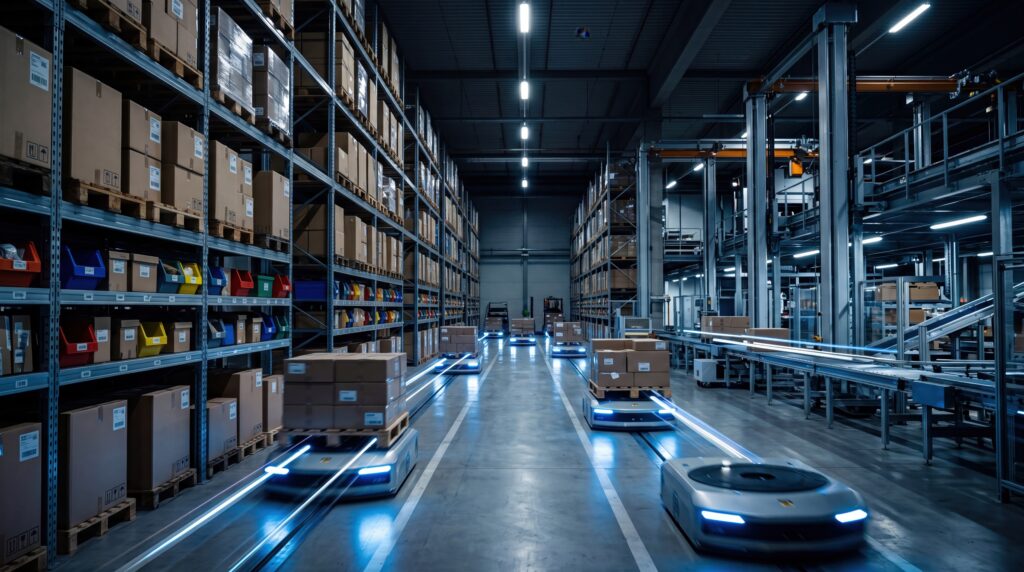
Although AI receives much attention, warehouse automation remains one of the core technologies behind every smart warehouse.
Automation handles repetitive physical tasks, while AI provides the intelligence needed to optimize those processes.
For example:
- AI decides where products should be stored.
- Automation moves inventory to those locations.
- AI prioritizes picking orders.
- Automation retrieves products.
- AI monitors performance and continuously improves workflows.
Together, AI and warehouse automation create highly efficient warehouse operations capable of adapting to changing demand.
Challenges of Building a Smart Warehouse
Despite the benefits, businesses should understand the challenges involved in implementing a smart warehouse.
Initial Investment
Building a smart warehouse often requires investment in software, robotics, sensors, infrastructure, and AI technologies.
Organizations should evaluate long-term operational savings against implementation costs.
Data Quality
AI relies on accurate operational data.
Poor inventory records or inconsistent data can reduce the effectiveness of automated decision-making.
Integration with Existing Systems
Many warehouses already use warehouse management systems (WMS), enterprise resource planning (ERP), and transportation platforms.
Integrating AI with these systems requires careful planning to ensure smooth operations.
Employee Training
Employees remain essential in every smart warehouse.
Businesses should provide training so teams can effectively work alongside AI-powered systems and automated equipment.
How to Transition to a Smart Warehouse
Moving to a smart warehouse does not require replacing every process at once.
Many businesses begin by automating one high-impact area before expanding further.
A practical approach includes:
- Assessing current warehouse performance
- Identifying repetitive manual tasks
- Implementing AI-powered inventory management
- Introducing scalable warehouse automation
- Integrating warehouse systems
- Monitoring performance continuously
This phased approach minimizes disruption while delivering measurable operational improvements.
The Future of Warehouse Logistics
The future of warehouse logistics will be increasingly intelligent.
AI will continue improving forecasting, inventory optimization, robotic coordination, and warehouse decision-making.
Future smart warehouse operations may include autonomous mobile robots, AI agents that coordinate warehouse workflows, predictive inventory planning, and digital twins that simulate warehouse performance before operational changes are implemented.
Rather than replacing warehouse employees, AI will continue helping them work more efficiently while improving safety and productivity.
Final Thoughts
The modern smart warehouse is transforming how businesses manage inventory, fulfill orders, and optimize operations. By combining artificial intelligence with warehouse automation, organizations can improve accuracy, increase productivity, reduce costs, and strengthen overall warehouse logistics performance.
As customer expectations continue to evolve, businesses that invest in intelligent warehouse technologies will be better positioned to scale operations, improve resilience, and remain competitive in an increasingly fast-moving supply chain environment.
FAQs
1. What is a smart warehouse?
A smart warehouse uses AI, IoT, robotics, and warehouse automation to optimize inventory management, order fulfillment, and warehouse operations with minimal manual intervention.
2. How does AI improve warehouse automation?
AI improves warehouse automation by optimizing inventory placement, coordinating robots, predicting demand, improving picking routes, and automating operational decisions using real-time data.
3. What are the benefits of a smart warehouse?
A smart warehouse improves inventory accuracy, increases operational efficiency, speeds up order fulfillment, reduces operating costs, and enhances customer satisfaction.
4. How does a smart warehouse improve warehouse logistics?
A smart warehouse strengthens warehouse logistics by providing real-time inventory visibility, optimizing warehouse workflows, improving forecasting, reducing fulfillment errors, and enabling faster, more efficient supply chain operations.