AI Agents in Logistics: Why Every Supply Chain Needs Intelligent AI Agents
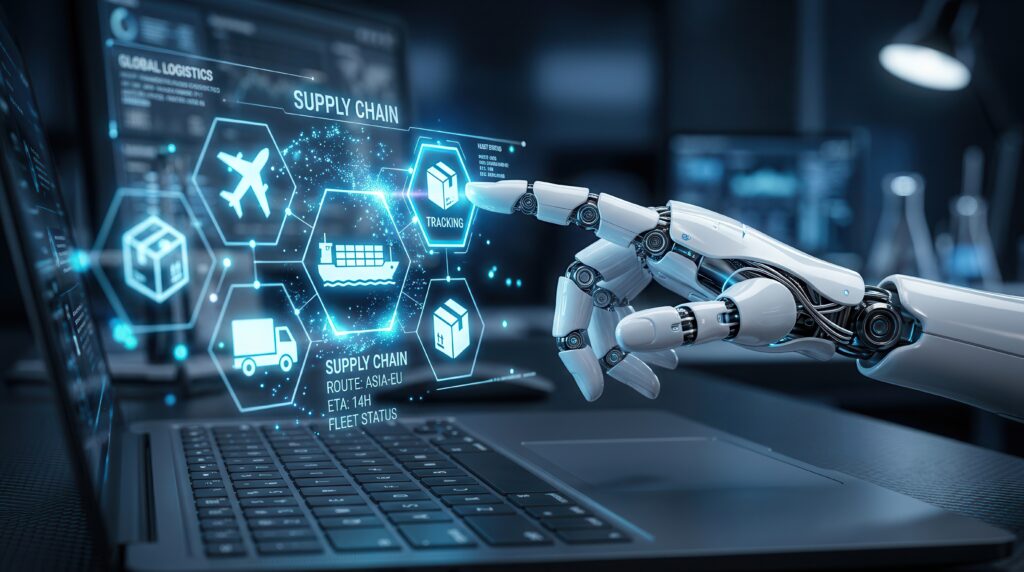
Businesses are already using AI agents in logistics in practical ways that improve day-to-day operations.
Transportation Planning
Traffic, weather, and road closures can change throughout the day.
AI agents monitor these conditions in real time and recommend better delivery routes when needed. This helps reduce delays, lower fuel costs, and improve on-time deliveries.
Warehouse Operations
Inside the warehouse, AI agents can monitor inventory, prioritize picking tasks, and coordinate automated equipment.
Instead of relying on fixed schedules, warehouse activities adjust based on current demand and incoming orders.
Inventory Management
Running out of stock can lead to lost sales, while carrying too much inventory increases storage costs.
AI agents in logistics analyze inventory levels and sales trends to recommend when products should be reordered. This helps businesses maintain healthier inventory levels without constant manual monitoring.
Customer Support
Customers increasingly expect real-time delivery updates.
AI agents automatically answer common shipment questions, provide tracking information, and notify customers when delivery times change.
This improves the customer experience while reducing the workload on support teams.
The Business Benefits
The biggest value of AI agents in logistics isn’t replacing people. It’s helping teams make better decisions, faster.
Some of the biggest benefits include:
- Faster response to disruptions
- Better visibility across supply chain logistics
- Improved inventory planning
- Lower manual workload
- More accurate delivery planning
- Better customer communication
- Increased operational efficiency
These improvements help businesses become more responsive without significantly increasing operating costs.
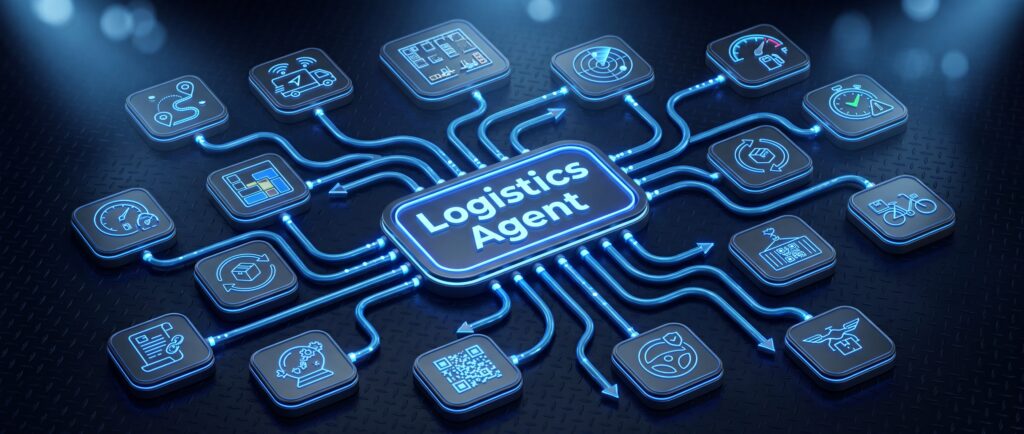
AI Agents vs Traditional Automation
Many businesses already use automation, but there is an important difference.
Traditional automation follows predefined rules. If the situation changes unexpectedly, someone usually needs to step in.
AI agents in logistics are more flexible. They evaluate real-time information, recognize changing conditions, and recommend the most appropriate action.
For example, traditional software might simply alert a manager that a shipment is delayed.
An AI agent can identify the cause of the delay, recommend another carrier, update the delivery schedule, and send a customer notification automatically.
That ability to adapt is one of the biggest reasons businesses are investing in AI in logistics.
Challenges to Consider
Like any technology, AI agents work best when implemented carefully.
The first challenge is data quality. AI depends on accurate information from warehouse systems, transportation platforms, and inventory software.
Businesses also need systems that can work together. If logistics data is stored across disconnected platforms, AI agents may have limited visibility.
Finally, employee adoption is essential. AI should support logistics teams, not replace them. Providing training and involving employees early in the implementation process helps organizations achieve better results.
What Does the Future Look Like?
The next generation of AI agents in supply chains will become even more capable.
Instead of supporting one department, they’ll work across transportation, warehousing, procurement, and customer service at the same time.
Imagine an AI agent detecting a supplier delay, adjusting warehouse schedules, rerouting deliveries, and notifying customers before anyone has to step in. That’s the direction the industry is heading.
As AI in logistics continues to evolve, businesses will rely on intelligent agents to make supply chains faster, more resilient, and easier to manage.
Final Thoughts
Supply chains are becoming too complex for manual decision-making alone. Businesses need tools that can respond quickly, reduce repetitive work, and keep operations moving even when unexpected challenges arise.
That’s why AI agents in logistics are becoming an important investment. They help logistics teams make smarter decisions, improve supply chain logistics, and automate routine tasks without losing human oversight.
Companies that begin adopting AI agents in logistics today will be better prepared to improve efficiency, reduce operational delays, and build supply chains that are ready for the future.
FAQs
1. What are AI agents in logistics?
AI agents in logistics are intelligent software systems that monitor logistics operations, analyze real-time data, and perform tasks such as route optimization, inventory monitoring, and shipment tracking with minimal human intervention.
2. How are AI agents different from traditional automation?
Traditional automation follows fixed rules, while AI agents in logistics can analyze changing situations, make recommendations, and adapt their actions based on real-time data.
3. How do AI agents improve supply chain logistics?
They improve supply chain logistics by reducing delays, optimizing inventory, improving transportation planning, automating routine workflows, and providing better operational visibility.
4. Can small businesses use AI agents in logistics?
Yes. Many AI-powered logistics platforms offer scalable solutions, making it possible for small and medium-sized businesses to adopt AI agents in logistics without investing in large enterprise systems.