Outbound Logistics : How AI Is Transforming Distribution and Supply Chain Efficiency
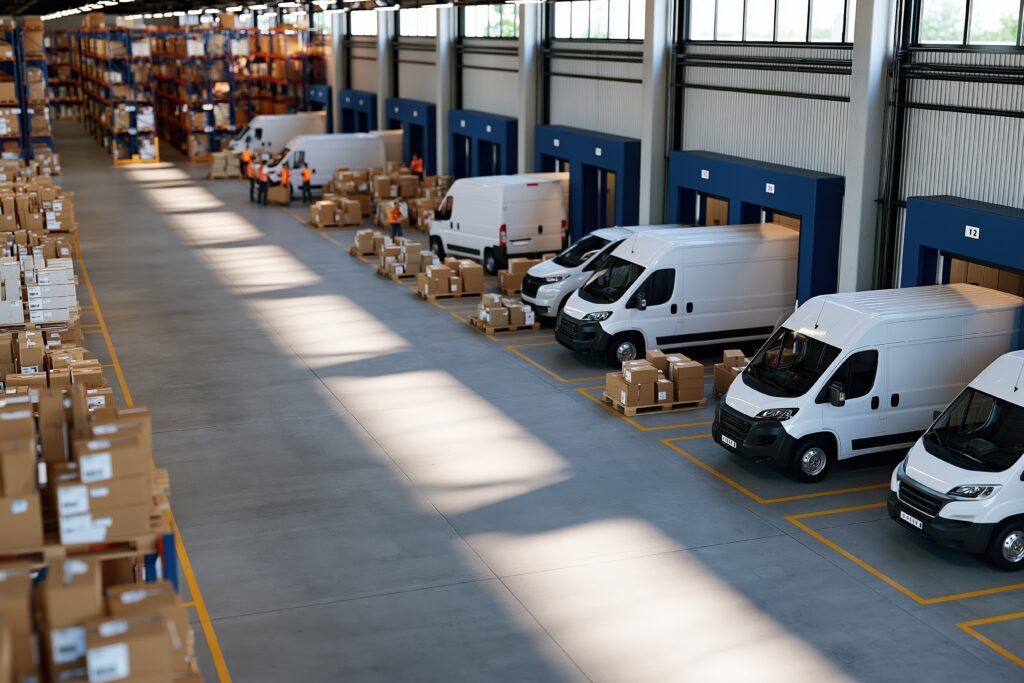
Getting products to customers efficiently is just as important as producing or storing them. Once an order is ready to leave a warehouse or distribution center, businesses need to coordinate picking, packing, transportation, delivery, and tracking.
This entire process falls under outbound logistics.
AI, automation, and linked logistics technologies support traditional procedures as customer demands for faster and more dependable delivery rise. These tools can help companies improve distribution decisions, identify delays, and deliver products from warehouses to customers.
What Is Outbound Logistics?
Outbound logistics refers to the processes involved in moving finished products from a business, warehouse, or distribution center to the next destination, usually a customer, retailer, or another distribution point.
Typical outbound activities include:
- Order processing
- Picking and packing
- Inventory allocation
- Shipment planning
- Carrier selection
- Transportation
- Delivery tracking
- Returns management
Inbound logistics brings goods in, while outbound logistics delivers finished products to customers or partners.
Efficient outbound operations are key to customer satisfaction, lower transportation costs, and better supply chain efficiency.
Why Outbound Logistics Matters
A delay at the final stages of a supply chain can affect the entire customer experience.
For example, inventory may be available, but an inefficient picking process can delay order fulfillment. A shipment can leave the warehouse on time but come late due to poor route planning. restricted tracking can also make it difficult for businesses to respond when a delivery problem occurs.
Improving outbound logistics means looking at the complete flow from order confirmation to final delivery.
The objective is to fulfill orders accurately, move them efficiently, control transportation costs, and provide reliable delivery visibility.
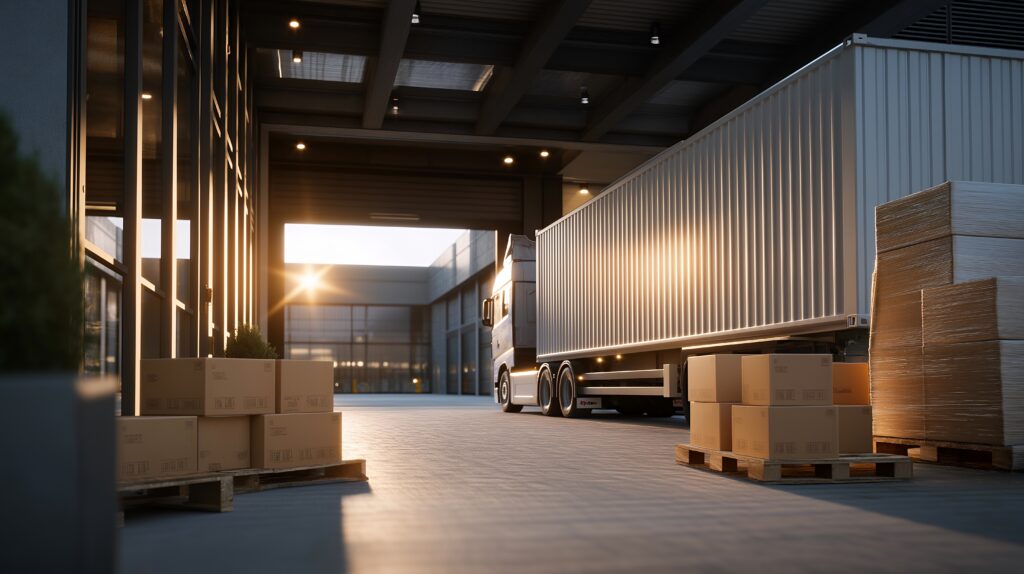
How AI Is Transforming Outbound Logistics
AI is valuable in outbound operations because they generate large amounts of data from orders and inventory to delivery schedules and carrier performance that AI can analyze for insights.
1. Smarter Order Fulfillment
AI can help determine how orders should be prioritized and where products should be picked from.
For businesses operating multiple warehouses or distribution centers, AI can analyze inventory availability, customer location, delivery requirements, and transportation factors to support better fulfillment decisions.
This can help reduce unnecessary movement and improve order processing efficiency.
2. AI-Powered Route Optimization
Transportation is one of the most important parts of outbound logistics.
AI analyzes delivery locations, traffic, vehicle capacity, and timing to find efficient routes. Unlike static plans, AI adapts to changing conditions, helping logistics teams adjust as needed.
This leads to lower costs, better vehicle use, and more reliable deliveries.
3. Better Delivery Predictions
Customers want accurate delivery times.
AI uses delivery data, shipment status, and carrier performance to estimate arrivals and spot delays early, helping businesses improve logistics and manage customer expectations.
4. Smarter Distribution Planning
AI in distribution can help businesses determine how inventory should be positioned and distributed across different locations.
For example, AI can scan historical demand, current inventory, customer locations, and transportation costs to support decisions about where products should be stored.
Better inventory positioning can remove nonessential transportation and help businesses respond faster to customer demand.
5. Predictive Risk Management
Outbound shipments can be affected by transportation disruptions, vehicle problems, capacity shortages, weather, or unexpected demand.
AI can analyze operational information to identify patterns that may indicate potential problems.
This provides logistics teams a chance to address problems sooner and explore different possibilities.
The goal is not to predict every disruption perfectly. It is to give teams better information before a disruption becomes a larger operational problem.
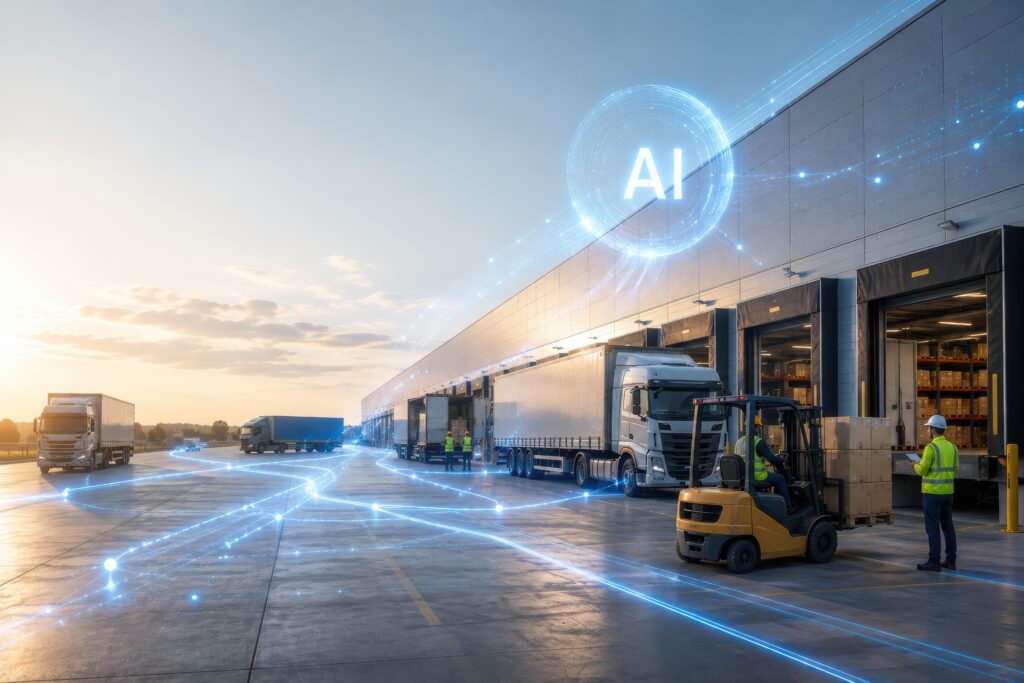
AI and Supply Chain Operations
Outbound activities are closely linked to inventory, warehousing, procurement, transportation, and customer demand, so AI in supply chain operations impacts more than just distribution.
For instance, demand forecasting shapes inventory availability, which affects fulfillment, and fulfillment decisions then guide transportation planning and delivery. AI connects these decisions by analyzing information across the entire supply chain.
AI Supply Chain Optimization: Where Does It Fit?
AI supply chain optimization involves using artificial intelligence to identify opportunities to improve how supply chain activities are planned and executed.
In outbound operations, this can include:
- Optimizing delivery routes
- Selecting efficient fulfillment locations
- Predicting delivery delays
- Improving inventory positioning
- Matching shipments with available capacity
- Analyzing carrier performance
The most effective implementations usually focus on specific business problems rather than attempting to apply AI across every process at once.
Benefits of AI in Outbound Logistics
When implemented around clear operational goals, AI can provide several benefits.
Improved Supply Chain Efficiency
Better planning and resource allocation can reduce unnecessary movement and operational delays.
Lower Transportation Costs
Route optimization and improved shipment planning can help businesses use transportation capacity more effectively.
Faster Order Fulfillment
AI-supported warehouse and fulfillment decisions can help reduce processing time.
Better Visibility
AI can analyze shipment information and identify potential issues earlier.
More Informed Decisions
Instead of relying entirely on historical reports, logistics teams can use real-time and predictive information to support operational decisions.
Challenges Businesses Should Consider
AI adoption comes with practical challenges.
Data quality is one of the most important. AI systems depend on accurate inventory, order, transportation, and shipment information.
System integration is another consideration. AI solutions may need to connect with warehouse management systems, transportation management systems, ERP platforms, and other logistics software.
Businesses also need to consider human oversight as it is a compulsion. AI recommendations should be reviewed appropriately, particularly when decisions involve significant financial, operational, or customer consequences.
Finally, businesses should measure results. Cost savings, delivery performance, fulfillment time, and order accuracy can help determine whether an AI implementation is delivering meaningful value.
How to Improve Outbound Logistics
Businesses can strengthen their outbound logistics by focusing on a few practical areas:
- Improve inventory visibility: Know where products are and which locations can fulfill orders efficiently.
- Review fulfillment processes: Identify unnecessary movement, delays, and repetitive manual tasks.
- Optimize transportation: Evaluate routes, carriers, shipment consolidation, and vehicle utilization.
- Use real-time tracking: Monitor shipments and identify potential delays earlier.
- Apply AI strategically: Start with measurable problems where better predictions or decisions can create clear value.
- Track performance: Monitor delivery times, fulfillment costs, order accuracy, and customer service metrics.
The Future of Outbound Logistics
Outbound logistics will become connected, predictive, and automated.
AI agents may monitor orders, inventory, transportation, and delivery exceptions and recommend or take predetermined actions.
Physical order fulfillment will improve with robotics and warehouse automation, and AI will support those decisions.
Logistics may not be fully autonomous; intelligent systems and specialists will work together on repetitive analysis and complex decisions.
Final Thoughts
Outbound logistics links inventory to customers. Efficient distribution, fulfillment, transportation, and delivery boost service and cut costs. AI enhances responsiveness through route optimization, smarter fulfillment, delivery predictions, and risk management.
But accurate data, integrated systems, clear processes, and measurable goals are also essential. utilized effectively, AI makes supply chains efficient and flexible.
FAQs
1. What is outbound logistics?
Outbound logistics is the process of moving finished products from a warehouse, distribution center, or business to customers, retailers, or other destinations.
2. How does AI improve outbound logistics?
AI can improve outbound logistics through route optimization, fulfillment planning, delivery prediction, distribution optimization, shipment monitoring, and risk detection.
3. What is AI in distribution?
AI in distribution uses AI to analyze inventory, demand, transportation, customer locations, and other data to improve how products are distributed.
4. How does AI improve supply chain efficiency?
AI can analyze data across supply chain operations to improve forecasting, inventory positioning, transportation planning, fulfillment, and risk management, supporting better supply chain efficiency.