How AI Is Transforming Supply Chain Management
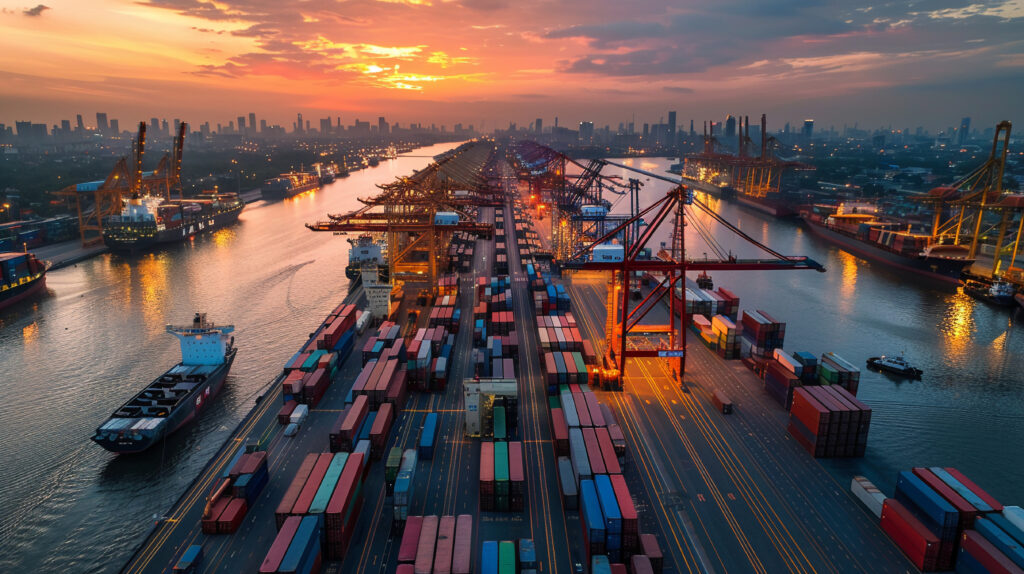
Supply chains have always depended on accurate information and timely decisions. But as businesses manage more suppliers, products, orders, warehouses, and transportation networks, traditional approaches are becoming harder to manage.
This is where AI in supply chain management is creating a significant shift.
Artificial intelligence can analyze large amounts of data, identify patterns, predict potential problems, and support faster decisions. Instead of relying only on historical reports or manual processes, businesses can use AI to understand what is happening across their supply chain and respond more effectively.
The result is a move toward more connected, responsive, and Smarter Supply Chains.
What Is AI in Supply Chain Management?
AI in supply chain management refers to using artificial intelligence to improve planning, forecasting, operations, and decision-making across the supply chain.
AI can work with data from areas such as:
- Customer orders
- Inventory levels
- Supplier activity
- Transportation
- Warehouse operations
- Sales patterns
- Market conditions
- Delivery performance
By analyzing this information, AI can identify trends and provide useful recommendations.
For example, instead of simply showing that inventory is running low, an AI system can analyze demand patterns and supplier lead times to help determine when and how much inventory should be reordered.
This makes Supply Chain AI useful for both day-to-day operations and long-term planning.
How AI Is Transforming Supply Chain Management
AI is influencing several important areas of supply chain operations.
1. Better Demand Forecasting
Accurate demand forecasting is essential for maintaining the right inventory levels.
Traditional forecasting often depends heavily on historical sales data. AI can consider a broader range of information and identify patterns that may be difficult to spot manually.
Businesses can use AI in supply chain forecasting to better anticipate changes in demand and adjust inventory or production plans accordingly.
Better forecasts can help reduce both excess inventory and stock shortages.
2. Smarter Inventory Management
Managing inventory involves finding the right balance. Too much inventory increases storage costs, while too little can lead to missed sales and disrupted operations.
AI can continuously analyze inventory levels, sales activity, demand patterns, and supplier information.
This allows businesses to identify potential shortages earlier and make more informed replenishment decisions.
For the supply chain industry, this can create a more responsive approach to inventory management rather than relying entirely on fixed reorder points.
3. More Efficient Transportation
Transportation is another area where AI can make a measurable difference.
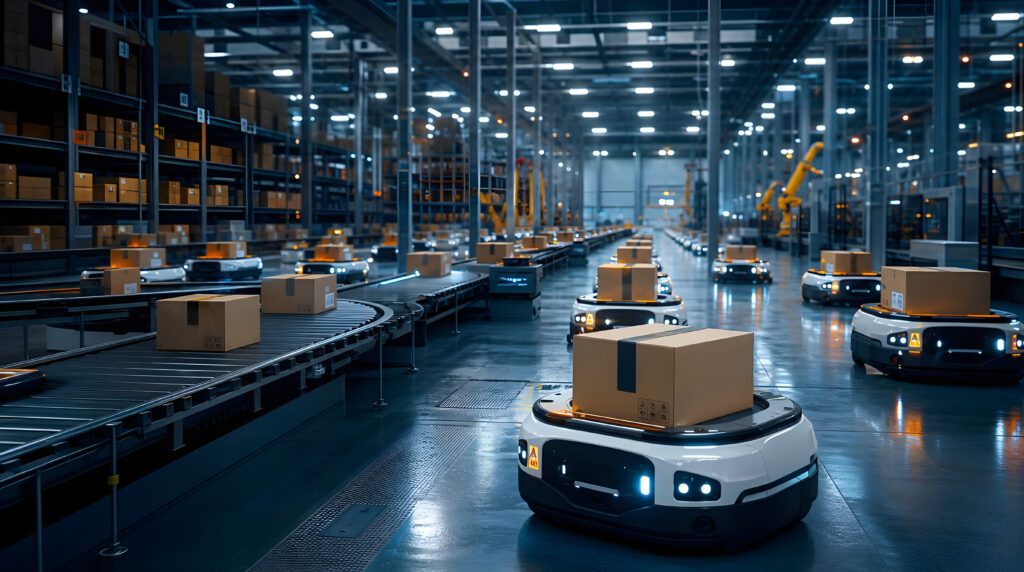
AI can analyze delivery schedules, routes, traffic conditions, transportation capacity, and historical performance to help businesses make better logistics decisions.
If conditions change, AI can help identify alternative options instead of relying on a transportation plan that may no longer be effective.
This is one reason AI in supply chain operations is becoming closely connected with logistics optimization.
4. Improved Supplier Management
Supplier performance can have a direct impact on the entire supply chain.
AI can analyze supplier lead times, delivery performance, order accuracy, pricing patterns, and other operational information.
Businesses can use these insights to identify recurring problems and understand which suppliers consistently meet expectations.
AI can also help identify potential supply disruptions earlier, giving teams more time to respond.
5. Faster Supply Chain Decision-Making
Supply chain professionals often need to make decisions while managing large amounts of information.
AI can process that information much faster and highlight the areas that require attention.
For example, an AI system could identify an unusual increase in demand, a supplier delay, or a transportation issue and bring it to the attention of the appropriate team.
This does not mean every decision should be made automatically. Instead, Supply Chain AI can give decision-makers better information at the right time.
AI and Supply Chain Transformation
The broader supply chain transformation is not simply about adding AI tools to existing processes.
Businesses need to look at how information moves between different parts of the operation.
A company may have separate systems for inventory, purchasing, transportation, warehousing, and sales. If these systems do not communicate effectively, AI cannot deliver its full value.
Successful transformation therefore requires reliable data, connected systems, clear processes, and people who understand how to use AI-generated insights.
When these pieces work together, AI can help create a more connected supply chain.
Benefits of AI in Supply Chain Management
The practical benefits of AI in supply chain management can include:
Improved forecasting: Better understanding of demand can support more accurate planning.
Lower inventory costs: Businesses can reduce unnecessary stock while maintaining availability.
Faster decisions: AI can process information quickly and highlight important changes.
Greater visibility: Teams can gain a clearer view of supply chain activity.
Reduced disruptions: Early identification of potential issues can give businesses more time to respond.
Improved efficiency: AI can identify opportunities to reduce delays, waste, and unnecessary manual work.
These benefits can contribute to more resilient and Modern Supply Chains.
Challenges Businesses Need to Consider
AI is not a solution that can simply be switched on.
Poor-quality data can produce unreliable results. Businesses also need to integrate AI with existing systems and establish clear processes for using AI recommendations.
Employees may also need training to understand how AI tools work and when human judgment should take priority.
Security and data governance are equally important, particularly when AI systems work with sensitive business information.
For many companies, the best approach is to start with a specific supply chain problem, measure the results, and gradually expand AI across other processes.
The Future of AI in Supply Chain Management
The Future Trends in supply chain management point toward greater use of AI, automation, connected systems, and real-time decision-making.
AI will increasingly move beyond reporting what happened and help businesses understand what could happen next.
AI agents may also handle more multi-step operational tasks, while predictive systems can identify risks before they become major disruptions.
However, successful adoption will still depend on people. AI can analyze information and recommend actions, but businesses need experienced teams to set objectives, oversee systems, and make important strategic decisions.
The future is therefore not simply about replacing people with technology. It is about combining human expertise with AI to build more responsive supply chains.
Final Thoughts
AI in supply chain management is changing how businesses plan, operate, and respond to uncertainty.
From demand forecasting and inventory management to supplier monitoring and transportation planning, AI can help businesses make faster, more informed decisions.
As supply chains become more complex, companies that invest in reliable data, connected systems, and practical AI applications can build more efficient and resilient operations.
The goal is not to use AI everywhere. It is to use it where it can solve real supply chain problems and create measurable business value.
Frequently Asked Questions
What is AI in supply chain management?
AI in supply chain management uses artificial intelligence to analyze supply chain data, identify patterns, predict potential issues, and support better operational decisions.
How does AI improve supply chain management?
AI can improve forecasting, inventory planning, transportation, supplier management, risk detection, and decision-making by analyzing large amounts of information quickly.
What is Supply Chain AI?
Supply Chain AI refers to artificial intelligence technologies designed to support or automate supply chain activities such as planning, forecasting, inventory management, and logistics.
What are the benefits of AI in supply chain management?
Key benefits include better forecasting, improved inventory control, faster decisions, greater visibility, improved efficiency, and earlier identification of potential disruptions.