AI in Logistics: Transforming Transportation, Warehousing, and Freight Operations
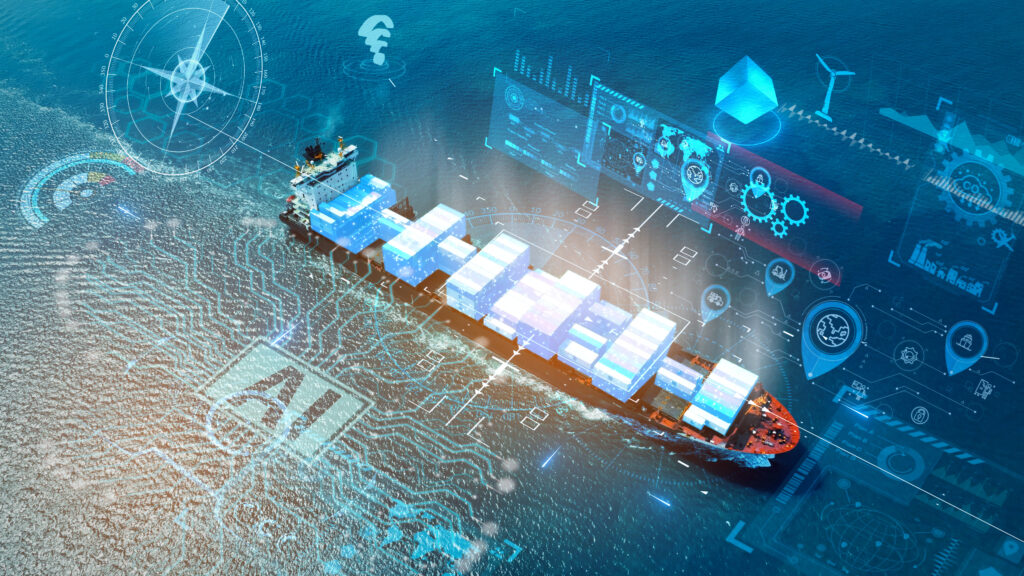
The logistics industry is under constant pressure to deliver faster, reduce costs, and respond to changing customer expectations. Businesses are managing larger shipment volumes, more complex supply chains, and increasing demand for real-time visibility. Traditional processes are no longer enough to keep up.
This is where AI in logistics is making a measurable difference. Artificial intelligence helps businesses automate routine tasks, improve decision-making, predict disruptions, and optimize operations across the entire supply chain.
From transportation planning to warehouse management and freight & shipping, AI is helping organizations improve efficiency while reducing operational costs. Rather than replacing human expertise, AI provides the insights and automation needed to make logistics operations more accurate, responsive, and scalable.
What Is AI in Logistics?
AI in logistics refers to the use of artificial intelligence, machine learning, predictive analytics, and automation technologies to improve how goods move through the supply chain.
Instead of relying solely on historical reports or manual planning, AI continuously analyzes real-time data to identify patterns, forecast demand, optimize routes, and support better operational decisions.
Today, AI in logistics supports a wide range of business functions, including:
- Transportation planning
- Warehouse management
- Inventory optimization
- Route optimization
- Demand forecasting
- Fleet management
- Customer service
- Freight & shipping coordination
The goal is to make logistics operations faster, more efficient, and more resilient.
Why AI Is Becoming Essential in Logistics Operations
Modern logistics operations involve thousands of moving parts. Businesses must coordinate suppliers, warehouses, transportation providers, inventory, and customers while maintaining speed and accuracy.
Unexpected delays, fuel price fluctuations, labor shortages, and supply chain disruptions can quickly impact business performance.
This is why more companies invest in AI in logistics.
AI enables businesses to monitor operations continuously, predict potential issues, and make proactive decisions before disruptions affect deliveries or customers.
How AI in Logistics Is Transforming Transportation
Transportation is one of the largest cost centers in logistics.
AI helps companies optimize transportation by improving planning, monitoring vehicle performance, and reducing unnecessary costs.
Smarter Route Optimization
One of the biggest applications of AI in logistics is intelligent route planning.
AI analyzes traffic conditions, weather forecasts, delivery priorities, road closures, fuel usage, and historical travel data to recommend the most efficient routes.
Instead of following fixed schedules, transportation plans adapt in real time, helping businesses reduce delays and improve on-time deliveries.
Fleet Performance Monitoring
AI continuously monitors vehicle health, driver behavior, and operational performance.
Businesses can identify excessive idling, harsh braking, speeding, fuel inefficiencies, and maintenance issues before they become costly problems.
These insights improve both fleet utilization and overall logistics operations.
Predictive Maintenance
Vehicle breakdowns can delay shipments and increase operating costs.
AI analyzes engine diagnostics, sensor data, and maintenance history to predict equipment failures before they occur.
This allows businesses to schedule maintenance proactively, reducing downtime and improving delivery reliability.
AI in Warehousing
Warehouses generate enormous amounts of operational data every day.
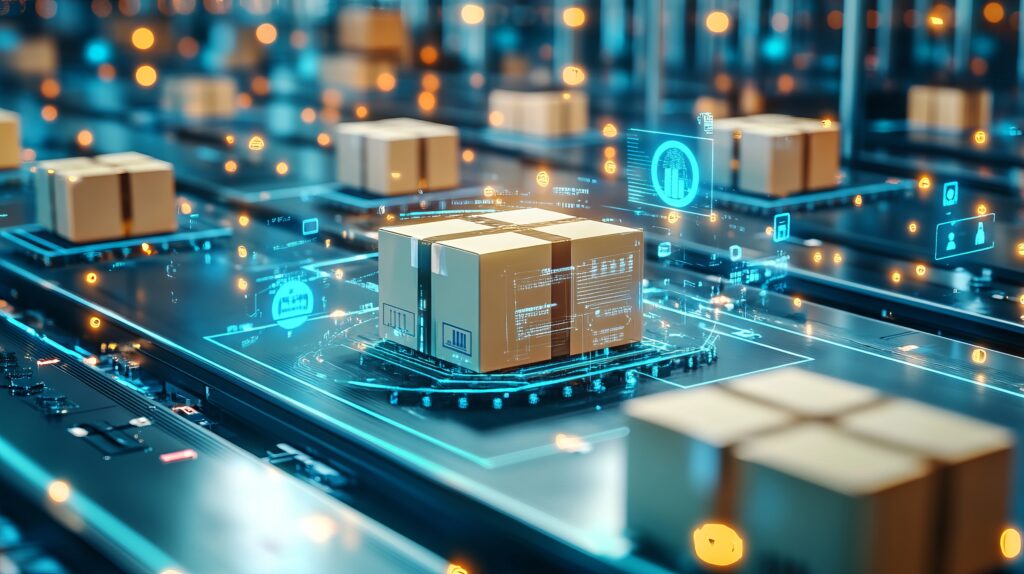
AI in logistics helps warehouses become more efficient by improving inventory management, order fulfillment, and workflow coordination.
Intelligent Inventory Management
AI monitors inventory movement in real time and predicts future stock requirements using sales trends, demand patterns, and seasonal fluctuations.
This reduces stock shortages, minimizes overstocking, and improves inventory accuracy.
Warehouse Automation
AI works alongside warehouse automation technologies such as robotic picking systems, automated storage and retrieval systems (AS/RS), and conveyor systems.
Rather than following fixed workflows, AI continuously optimizes warehouse operations based on incoming orders and inventory availability.
The result is faster fulfillment with fewer manual errors.
Better Order Fulfillment
AI prioritizes picking routes, coordinates warehouse staff and robots, and improves packing efficiency.
Businesses process more orders while maintaining high accuracy, especially during peak demand periods.
AI in Freight & Shipping
Managing freight & shipping involves coordinating carriers, schedules, documentation, customs requirements, and shipment tracking.
AI simplifies these complex processes by improving visibility and decision-making.
Shipment Visibility
AI combines data from GPS systems, transportation platforms, and carrier networks to provide real-time shipment tracking.
Businesses can identify delays early and communicate accurate delivery updates to customers.
Freight Cost Optimization
AI evaluates shipping rates, delivery schedules, fuel costs, and carrier performance to recommend the most cost-effective shipping options.
This helps businesses balance transportation costs with delivery speed.
Documentation and Compliance
AI automates the creation and verification of shipping documents, invoices, customs paperwork, and compliance records.
Automating documentation reduces administrative workloads while improving accuracy.
Key Benefits of AI in Logistics
Businesses implementing AI in logistics are seeing measurable improvements across their operations.
Improved Operational Efficiency
AI automates repetitive tasks, accelerates decision-making, and reduces manual workloads throughout logistics operations.
Better Forecasting
AI analyzes historical data alongside real-time information to improve demand forecasting and inventory planning.
Lower Operating Costs
Optimized transportation routes, efficient warehouse workflows, and improved freight & shipping planning help reduce fuel, labor, and inventory costs.
Increased Supply Chain Visibility
Businesses gain real-time insights into shipments, warehouse inventory, fleet performance, and operational bottlenecks.
Enhanced Customer Experience
Accurate delivery estimates, faster fulfillment, and proactive communication improve customer satisfaction.
Real-World Use Cases of AI in Logistics
Organizations across multiple industries are already using AI in logistics to improve performance.
Retail and E-commerce
Retailers use AI for demand forecasting, warehouse optimization, inventory planning, and faster order fulfillment.
Manufacturing
Manufacturers improve inventory management, production planning, and supplier coordination using AI-powered insights.
Third-Party Logistics (3PL)
3PL providers use AI to optimize warehouse capacity, transportation scheduling, and freight & shipping operations for multiple clients.
Healthcare Logistics
Healthcare organizations rely on AI to manage temperature-sensitive shipments, optimize inventory, and improve delivery accuracy for critical medical supplies.
Challenges of Implementing AI in Logistics
While AI delivers significant value, businesses should also prepare for implementation challenges.
Data Quality
AI depends on accurate and consistent operational data.
Poor-quality data can reduce prediction accuracy and limit the effectiveness of automated decision-making.
System Integration
Many businesses operate multiple logistics systems, warehouse management platforms, transportation software, and ERP solutions.
Integrating AI across these platforms requires careful planning.
Initial Investment
Implementing AI often requires investment in software, cloud infrastructure, connected devices, and employee training.
Organizations should evaluate long-term operational benefits alongside upfront costs.
Workforce Adoption
Employees play an essential role in successful AI implementation.
Training logistics teams to work alongside AI systems helps maximize productivity while encouraging technology adoption.
How to Successfully Adopt AI in Logistics
Businesses should approach AI implementation strategically.
A practical roadmap includes:
- Identify operational challenges.
- Prioritize high-impact use cases.
- Ensure high-quality operational data.
- Integrate AI with existing logistics platforms.
- Train employees.
- Continuously monitor and improve performance.
Many organizations begin with one process, such as transportation planning or warehouse optimization, before expanding AI across all logistics operations.
The Future of AI in Logistics
The future of AI in logistics goes beyond automation.
Emerging technologies such as generative AI, agentic AI, digital twins, autonomous vehicles, and intelligent robotics will further improve transportation, warehousing, and freight & shipping.
Future AI systems will make real-time operational decisions, coordinate complex logistics networks, predict disruptions before they occur, and continuously optimize supply chain performance.
Organizations that adopt AI today will be better prepared to adapt to evolving customer expectations and increasingly complex global supply chains.
Final Thoughts
AI in logistics is transforming how businesses manage transportation, warehouse operations, and freight & shipping. By combining automation with intelligent decision-making, AI helps organizations improve efficiency, reduce costs, increase visibility, and strengthen overall logistics operations.
As supply chains continue to evolve, businesses that invest in AI-powered logistics solutions will be better positioned to improve operational resilience, scale efficiently, and deliver exceptional customer experiences in an increasingly competitive market.
FAQs
1. What is AI in logistics?
AI in logistics uses artificial intelligence to optimize transportation, warehousing, inventory management, routing, demand forecasting, and overall logistics operations through automation and data-driven decision-making.
2. How does AI improve freight & shipping?
AI improves freight & shipping by optimizing carrier selection, reducing transportation costs, improving shipment visibility, automating documentation, and predicting delivery delays before they affect customers.
3. What are the benefits of AI in logistics?
The main benefits include improved operational efficiency, better forecasting, lower transportation costs, enhanced warehouse productivity, increased supply chain visibility, and better customer service.
4. Can small and mid-sized businesses use AI in logistics?
Yes. Many AI-powered logistics solutions are scalable, allowing small and mid-sized businesses to improve logistics operations, automate workflows, optimize transportation, and enhance decision-making without requiring large enterprise-level investments.