How AI Fleet Management Is Reshaping Modern Transportation

Transportation is the backbone of every supply chain. Whether it’s delivering products to customers, moving raw materials between facilities, or managing service vehicles, businesses depend on efficient fleet management to keep operations running smoothly.
However, managing a growing fleet has become more challenging. Rising fuel costs, vehicle downtime, driver shortages, and increasing customer expectations require businesses to operate smarter than ever before.
This is where AI fleet management is changing the game. By combining artificial intelligence with connected vehicle technology, businesses can improve operational efficiency, reduce costs, and make faster, data-driven decisions..
What Is Fleet Management?
Before exploring artificial intelligence, it’s important to understand what fleet management is.
It is the process of overseeing and coordinating commercial vehicles to ensure they operate efficiently, safely, and cost-effectively. It includes everything from vehicle acquisition and maintenance to route planning, fuel management, driver performance, compliance, and asset tracking.
The goal of fleet management is to maximize vehicle utilization while reducing operational costs and improving customer service.
Today, businesses across logistics, transportation, construction, healthcare, retail, and field services rely on effective management of vehicle fleet operations to remain competitive.
What Is AI Fleet Management?
AI fleet management uses artificial intelligence, machine learning, predictive analytics, and real-time data to automate and optimize fleet management processes.
Instead of relying solely on manual reports or historical data, AI continuously analyzes information from GPS devices, telematics systems, sensors, traffic updates, and vehicle diagnostics.
This enables businesses to make proactive decisions that improve fleet performance while reducing unnecessary expenses.
As AI in transportation continues to evolve, fleet managers can gain deeper operational insights and respond to changing conditions much faster.
How AI Is Transforming Fleet Management
Artificial intelligence is improving nearly every aspect of fleet management.
Smarter Route Optimization
One of the biggest applications of AI fleet management is intelligent route planning.
AI evaluates traffic conditions, weather, delivery priorities, road closures, and fuel consumption to recommend the fastest and most efficient routes.
Instead of following static schedules, vehicles can automatically adapt to changing road conditions, helping businesses reduce delays and improve delivery performance.
Predictive Vehicle Maintenance
Unexpected vehicle breakdowns can disrupt operations and increase maintenance costs.
With AI fleet management, vehicle sensors continuously monitor engine health, tire pressure, battery performance, and other critical components.
AI identifies potential maintenance issues before failures occur, allowing businesses to schedule repairs proactively and reduce costly downtime.
Better Fuel Management
Fuel represents one of the largest operating expenses in fleet management.
AI analyzes driving behavior, idle time, route efficiency, and vehicle performance to identify opportunities for reducing fuel consumption.
These insights help businesses lower operating costs while supporting sustainability goals.
Improved Driver Performance
Safe and efficient driving directly affects transportation costs.
AI monitors behaviors such as harsh braking, speeding, rapid acceleration, excessive idling, and route compliance.
Fleet managers can use this information to coach drivers, improve safety, and reduce accident risks.
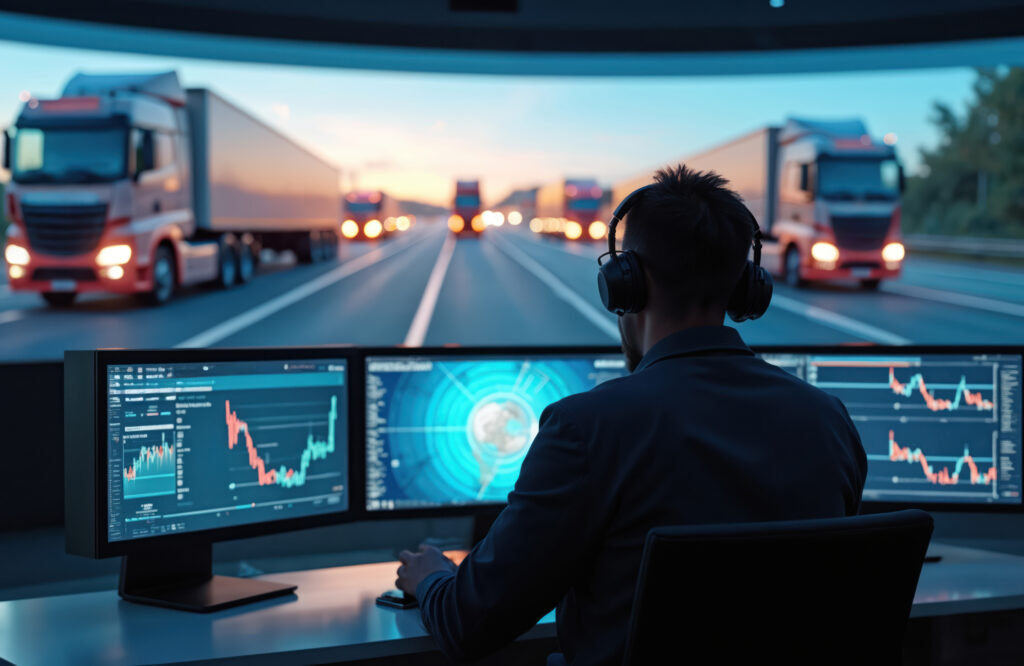
Real-Time Fleet Visibility
Modern fleet management depends on accurate, real-time information.
AI provides live visibility into vehicle locations, shipment status, estimated arrival times, and operational performance.
This enables businesses to make faster decisions and keep customers informed throughout the delivery process.
Key Benefits of AI Fleet Management
Businesses adopting AI fleet management are seeing measurable improvements across their transportation operations.
Reduced Operating Costs
AI helps optimize routes, minimize fuel consumption, reduce maintenance expenses, and improve vehicle utilization.
Increased Fleet Productivity
Automated planning and intelligent scheduling allow fleets to complete more deliveries with greater efficiency.
Better Customer Experience
Accurate delivery tracking and improved route planning help businesses provide more reliable delivery windows and faster service.
Enhanced Compliance
AI helps monitor driver hours, vehicle inspections, maintenance schedules, and regulatory requirements, reducing compliance risks.
Improved Decision-Making
Instead of relying on manual reports, businesses gain real-time insights that support faster and more informed operational decisions.
AI in Transportation: Beyond Fleet Tracking
The impact of AI in transportation extends far beyond vehicle tracking.
Businesses are using AI to:
- Forecast transportation demand
- Optimize delivery schedules
- Improve warehouse coordination
- Monitor driver safety
- Automate dispatch operations
- Predict shipment delays
- Improve customer communication
- Support sustainability initiatives
These capabilities enable organizations to build more resilient transportation networks while improving operational efficiency.
Fleet Service Management in the AI Era
Another area benefiting from artificial intelligence is fleet service management.
Traditional maintenance schedules often rely on fixed service intervals.
AI replaces this reactive approach with predictive maintenance based on actual vehicle performance.
For example, AI can recommend servicing a vehicle earlier if engine data indicates unusual wear, or delay maintenance if performance remains optimal.
This approach reduces unnecessary servicing while preventing unexpected breakdowns.
As a result, businesses improve vehicle reliability and extend asset lifespan.
Challenges of Implementing AI Fleet Management
Although the advantages are significant, businesses should also understand the challenges of implementing AI fleet management.
Initial Investment
Deploying AI-powered telematics, sensors, and software requires upfront investment.
Organizations should evaluate long-term savings against implementation costs.
Data Quality
AI depends on accurate and consistent operational data.
Incomplete or inaccurate vehicle data can reduce the effectiveness of AI recommendations.
System Integration
Businesses often operate multiple software platforms, including ERP systems, dispatch software, and transportation management systems.
Successful management of vehicle fleet operations requires seamless integration between these technologies.
Employee Adoption
Drivers, dispatchers, and fleet managers need proper training to effectively use AI-powered systems.
Successful implementation depends on combining technology with skilled people.
How to Successfully Adopt AI Fleet Management
Businesses considering AI fleet management should take a structured approach.
Start by identifying operational challenges such as high fuel costs, excessive downtime, or inefficient routing.
Next:
- Define measurable business goals.
- Invest in quality telematics and connected vehicle technology.
- Ensure accurate fleet data.
- Integrate AI with existing fleet systems.
- Train employees.
- Continuously monitor performance and optimize operations.
Starting with one area, such as route optimization or predictive maintenance, allows businesses to demonstrate value before expanding AI across the fleet.
The Future of Fleet Management
The future of fleet management will be increasingly connected, intelligent, and automated.
Advancements in AI, IoT, autonomous vehicles, and predictive analytics will enable fleets to operate with greater efficiency while reducing operational risks.
Future AI fleet management platforms will make real-time decisions, coordinate vehicle movements, optimize maintenance schedules, and continuously improve transportation performance through machine learning.
Businesses that adopt AI today will be better positioned to adapt to changing market demands and customer expectations.
Final Thoughts
Modern transportation requires more than GPS tracking and manual reporting. Businesses need intelligent systems that can predict issues, optimize operations, and support faster decision-making.
AI fleet management is helping organizations improve fleet management by reducing costs, increasing efficiency, enhancing driver safety, and improving customer service. Combined with advances in AI in transportation, businesses can build smarter, more resilient operations that are ready for future growth.
Whether you’re managing a small delivery fleet or a nationwide transportation network, investing in AI-driven management of vehicle fleet operations can create lasting competitive advantages.
FAQs
1. What is fleet management?
Fleet management is the process of managing commercial vehicles, drivers, maintenance, fuel usage, compliance, and daily operations to improve efficiency, reduce costs, and ensure reliable transportation.
2. What is AI fleet management?
AI fleet management uses artificial intelligence, predictive analytics, and real-time vehicle data to optimize routing, maintenance, fuel management, driver performance, and overall fleet operations.
3. How does AI improve fleet management?
AI improves fleet management by enabling predictive maintenance, optimizing routes, monitoring driver behavior, reducing fuel consumption, improving vehicle utilization, and providing real-time operational insights.
4. What industries benefit from AI fleet management?
Industries such as logistics, transportation, retail, construction, healthcare, utilities, field services, and distribution can all benefit from AI fleet management by improving operational efficiency and reducing transportation costs.