2026 Logistics Technology Trends Every Leader Should Watch
The logistics industry is entering a new phase of transformation. What was once focused on moving goods from one point to another is now centered on creating intelligent, connected, and data-driven supply chains.
Customer expectations continue to rise, disruptions remain unpredictable, and businesses are under constant pressure to improve efficiency without increasing costs. As a result, investing in the right logistics technology has become a strategic business decision rather than an operational upgrade.
For leaders planning their technology roadmap, understanding the trends shaping 2026 is essential. Here are the innovations that are redefining logistics and enabling long-term logistic growth.
1. AI Will Become the Decision Engine of Logistics
Artificial intelligence has already proven its value in logistics, but 2026 is where AI moves beyond automation into autonomous decision-making.
Modern AI platforms can analyze delivery schedules, warehouse capacity, weather conditions, fuel costs, and traffic patterns simultaneously to recommend the best operational decisions in real time.
Businesses using AI-driven logistics technology can:
- Improve route optimization
- Reduce transportation costs
- Predict shipment delays before they occur
- Optimize warehouse operations
- Improve demand forecasting
Rather than reacting to disruptions, organizations can proactively prevent them—creating faster, more resilient supply chains.
Businesses looking to integrate AI into logistics operations can also explore capabilities through intelligent automation solutions.
2. End-to-End Supply Chain Visibility Will Be the Standard
Disconnected systems create blind spots.
Many organizations still rely on separate platforms for fleet management, warehouse operations, procurement, and customer communication. This fragmented approach slows decision-making and reduces operational visibility.
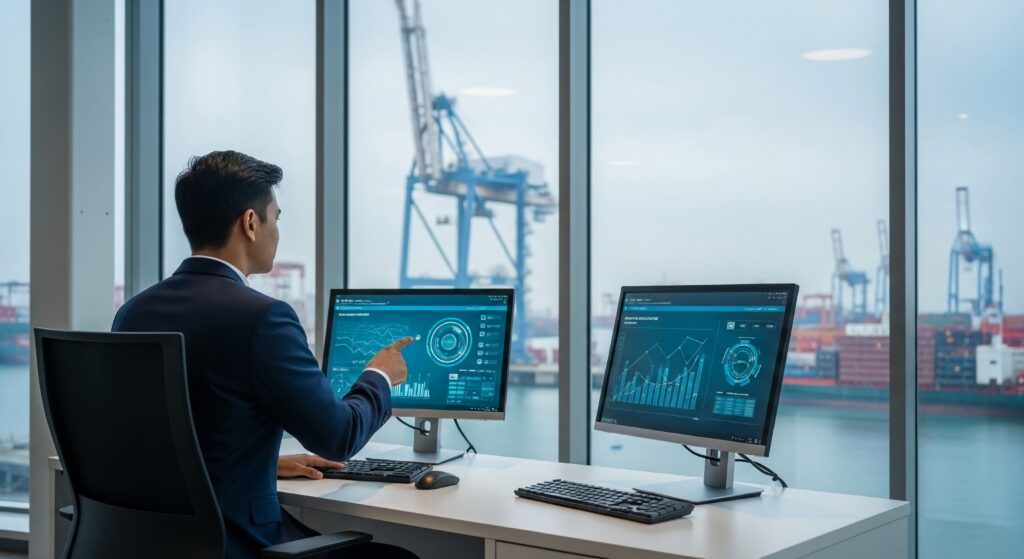
In 2026, leading companies are investing in unified logistics technology that connects every stage of the supply chain.
With real-time dashboards and centralized data, leaders can monitor:
- Inventory movement
- Fleet performance
- Delivery status
- Warehouse productivity
- Supplier performance
Complete visibility enables faster responses to disruptions while improving customer satisfaction and operational efficiency.
Organizations modernizing their digital infrastructure should also consider integrated enterprise solutions that connect data across business functions.
3. Predictive Analytics Will Replace Reactive Planning
Traditional logistics planning relies heavily on historical reporting.
Modern logistics technology uses predictive analytics to anticipate future events before they impact operations.
Using historical trends and live operational data, predictive models can forecast:
- Seasonal demand fluctuations
- Inventory shortages
- Equipment maintenance
- Delivery bottlenecks
- Transportation risks
Instead of solving problems after they occur, businesses can allocate resources more effectively and reduce unnecessary operational costs.
Predictive planning is quickly becoming one of the strongest drivers of sustainable logistic growth.
4. Warehouse Automation Will Continue to Accelerate
Warehouses are becoming smarter, faster, and more connected.
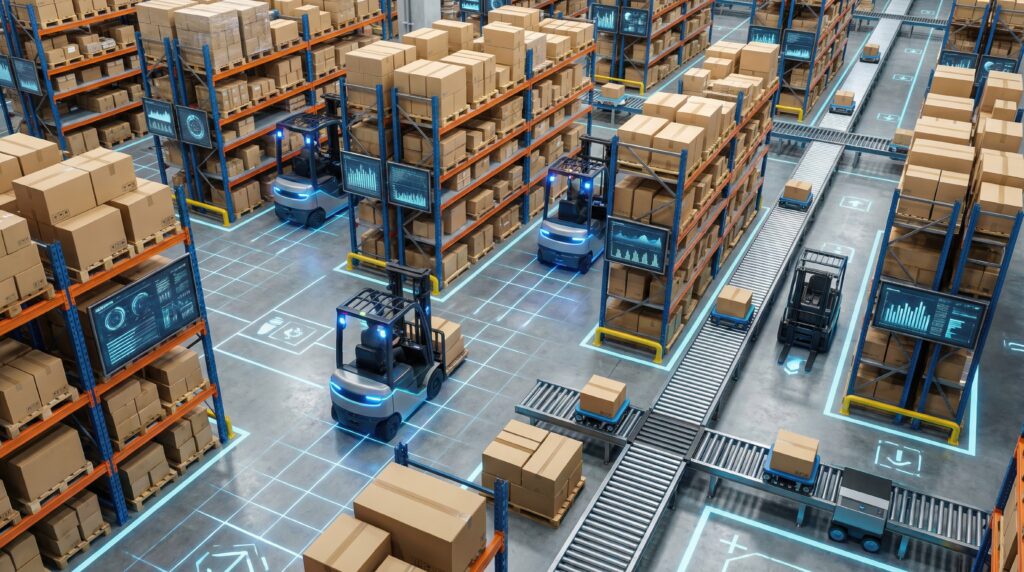
Automation is no longer limited to large enterprises. Businesses of all sizes are adopting technologies such as:
- Automated picking systems
- Computer vision for quality checks
- Autonomous mobile robots (AMRs)
- Smart inventory tracking
- AI-assisted warehouse management
These technologies reduce manual errors while improving order accuracy and fulfillment speed.
Combined with cloud-based warehouse management systems, automation creates operations that scale without significantly increasing labor costs.
5. Digital Twins Will Improve Operational Planning
One of the fastest-growing innovations in logistics technology is the adoption of digital twins.
A digital twin creates a virtual replica of logistics operations, allowing businesses to simulate different scenarios before making real-world decisions.
For example, companies can model:
- Warehouse expansion
- Fleet allocation
- Route optimization
- Demand spikes
- Supplier disruptions
Instead of relying on assumptions, leaders can evaluate multiple outcomes using real operational data.
This significantly reduces planning risks while improving investment decisions.

6. Sustainability Will Drive Technology Investments
Sustainability is becoming a competitive advantage rather than simply a compliance requirement.
Customers, investors, and regulators increasingly expect organizations to reduce emissions and improve resource efficiency.
Modern logistics technology helps organizations achieve these goals by enabling:
- Fuel-efficient route planning
- Load optimization
- Reduced empty-mile transportation
- Energy-efficient warehouse operations
- Real-time carbon emission tracking
The result is lower operational costs alongside stronger environmental performance.
Smart logistics is no longer just about speed it’s also about responsible growth.
7. Connected Platforms Will Replace Standalone Software
Buying more software does not automatically improve logistics.
Many organizations struggle because their systems don’t communicate effectively.
The future belongs to connected platforms that integrate ERP systems, CRM platforms, warehouse management, transportation management, finance, and analytics into one unified ecosystem.
Integrated logistics technology eliminates duplicate work, improves data accuracy, and gives decision-makers access to reliable information across departments.
Businesses investing in scalable digital ecosystems often see stronger operational performance and faster business growth.
Organizations can build connected technology ecosystems through custom software development, cloud engineering, data engineering, and enterprise integration solutions designed for long-term scalability.
Preparing for the Future of Logistics
Technology alone will not transform logistics.
Success depends on choosing solutions that work together, generate meaningful insights, and support continuous improvement.
The organizations leading the industry in 2026 won’t necessarily have the largest technology budgets. They’ll have the smartest technology strategies—ones built around connected systems, intelligent automation, and data-driven decision-making.
For businesses aiming to improve operational efficiency and accelerate logistic growth, investing in modern logistics technology today will create a stronger competitive advantage tomorrow.
Enterprises design intelligent logistics solutions that combine AI, automation, cloud infrastructure, and enterprise integration to build resilient, scalable supply chains prepared for the future.
FAQs
1. What is logistics technology?
Logistics technology refers to the digital tools, software, and intelligent systems used to optimize supply chain operations, transportation, warehousing, inventory management, and delivery processes. Technologies such as AI, cloud computing, IoT, predictive analytics, and automation help businesses improve efficiency, reduce costs, and make data-driven decisions.
2. How is AI transforming the logistics industry?
AI is transforming logistics by enabling smarter route optimization, demand forecasting, predictive maintenance, warehouse automation, and real-time decision-making. It helps businesses identify potential disruptions before they occur, improve operational efficiency, and enhance overall supply chain performance.
3. Why is supply chain visibility important?
End-to-end supply chain visibility gives businesses real-time insights into inventory, shipments, fleet operations, warehouse performance, and supplier activities. This transparency allows organizations to respond quickly to disruptions, improve customer satisfaction, and make more informed business decisions.
4. What are the biggest logistics technology trends in 2026?
Some of the most significant logistics technology trends in 2026 include AI-powered decision-making, predictive analytics, warehouse automation, digital twins, connected enterprise platforms, intelligent automation, and sustainability-focused logistics solutions that reduce operational costs and environmental impact.
5. How can businesses choose the right logistics technology?
Businesses should prioritize solutions that integrate seamlessly with existing systems, scale with future growth, provide real-time data insights, and support automation and AI capabilities. A strategic technology roadmap focused on long-term business goals will deliver greater value than adopting standalone tools.